Did You Know Whales Are Not Biodegradable?
By the United States government's official definition, a whale is not biodegradable. Neither is a tree. Nothing about that sentence is a joke. The rule is real, it is written down, and once you see why it was written, you will never read a green label the same way again.
What the Rule Actually Says
Under the rules used in the United States, nothing gets to call itself biodegradable unless it fully breaks down within about one year. That is the whole test. One year on a stopwatch.
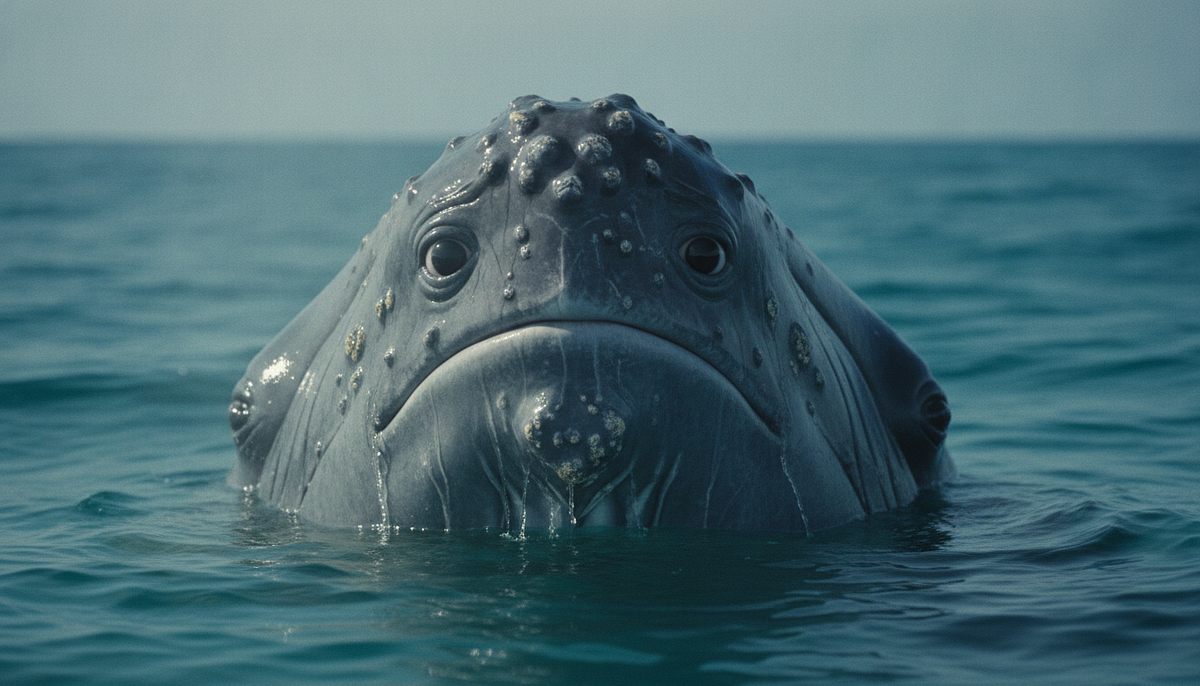
Now apply that test honestly. A whale that dies at sea is taken apart by sharks, crabs, worms, and bacteria until the ocean has reclaimed every ounce of it. That takes years. A fallen oak rots into soil. That can take decades. By the government's own stopwatch, the whale fails. The forest fails. The most natural disappearing acts on Earth do not qualify for the word we invented to describe them.
Why the Rule Exists
Nobody writes a definition that flunks a whale by accident.
Think about what a one-year deadline really filters out. Anything that truly breaks down in weeks cannot sit in a warehouse, survive a delivery truck, and wait on a store shelf for two years. And anything tough enough to do those things will always need more than a year to break down. Every useful package on Earth fails the test automatically.
That deadline was never a scientific line. It is a commercial moat. The companies whose income depends on plastic that lasts forever could not win the science argument, so their lobbyists helped them win the dictionary instead. Change what the word means, and every competitor fails by definition. Then you point at the rule as proof.
And here is the part that should genuinely make you angry. Under this rule, a bottle that breaks down completely in fourteen months gets the exact same legal status as ordinary plastic that sits in the ground for five hundred years. Neither one is allowed to call itself biodegradable. Miss the deadline by two months or miss it by five centuries, and the law sees no difference at all. A rule that cannot tell those two bottles apart was not written to inform you. It was written to make sure you never compare them.
What the Rule Protects
Here is what hides behind that stopwatch. An ordinary plastic bottle does not break down, and it does not disappear. It shatters, slowly, into smaller and smaller pieces called microplastics. Those pieces are now in drinking water, in fish, and in people. In 2024, researchers in one of the world's leading medical journals reported microplastic fragments inside human arteries, and the people carrying them had a significantly higher risk of heart attack and stroke. The same fragments have been found in human blood and in breast milk.
The one-year rule has nothing to say about any of that. It was never protecting you from that bottle. It was protecting that bottle from competition.
The Bottle That Was Locked Out
This is where it stops being a story about words. BioBottles® are bottles built so that breaking down safely is a property of the material itself, not a promise on a label. They hold your supplements on a shelf for five years like any other bottle, and if one ever escapes the recycling stream, it breaks down without leaving microplastics behind. That is not the brand grading its own homework: the testing was done by independent laboratories with no stake in the answer, and you can see the results at gogreenfrog.com.
Now put the two bottles side by side. A BioBottles® bottle breaks down in about fourteen months. An ordinary plastic bottle takes hundreds of years; five centuries is a common estimate. One misses the government's deadline by two months. The other misses it by half a millennium. And the rule calls them the same thing. Shelf-stable means slower than the stopwatch, slower than the stopwatch means locked out of the word, and the word is all most shoppers ever see. The rule did exactly what it was built to do.
"No microplastics. Please recycle."
One Question to Ask
You do not need a chemistry degree to defend yourself from a bent definition. You need one question: when this package is gone from sight, what is it then? If the honest answer is smaller pieces of plastic, nothing broke down. It just got harder to see.
A whale rots. A forest turns to soil. The government's stopwatch says neither one counts, and it was set that way on purpose. Do not let a bent word decide what you believe.