Is It Greenwashing to Say Plastic Packaging Prevents Microplastics? Here Is the Honest Answer.
Brand owners ask: is claiming your packaging prevents microplastics greenwashing? We break down exactly what makes the claim credible, compliant, and defensible under FTC Green Guides and ASTM D6954.
The Question Brand Owners Are Asking Right Now
If your packaging team or legal counsel has flagged the phrase 'prevents microplastics' as a potential greenwashing risk, they are asking exactly the right question. The answer depends entirely on two things: what the packaging actually does, and whether that performance is verified by credible, third-party scientific testing. When both conditions are met, the claim is not greenwashing. It is science-backed differentiation. When either condition is missing, the claim is a liability.
Why Microplastic Claims Are Under Scrutiny
The FTC Green Guides (16 CFR Part 260) require that every environmental claim be truthful, qualified where necessary, and supported by competent, reliable scientific evidence. California SB 343 adds a labeling layer that penalizes unsubstantiated recyclability and environmental benefit claims. Neither regulation bans microplastic-prevention language outright. What they prohibit is vague, unqualified, or unsubstantiated claims. Saying your bottle 'helps the ocean' is greenwashing. Saying it is 'scientifically verified under ASTM D6954 Tier 1-3 testing to prevent the formation of persistent microplastics if packaging escapes containment' is a precise, qualified, testable claim.
What Makes a Microplastic-Prevention Claim Legitimate
Three elements separate a credible microplastic-prevention claim from a greenwashing exposure. First, a documented mechanism: the packaging must have a scientifically understood process that stops persistent fragment formation, not just marketing intent. Second, third-party testing: the mechanism must be validated by independent laboratories against a recognized standard, not internal assertions. Third, qualified scope: the claim must specify the conditions under which the benefit applies, rather than implying a universal or unconditional outcome.
BioBottles® and BioCaps® satisfy all three criteria through PlasticIQ® technology (BioPolymer), a prodegradant catalyst integrated into HDPE and PP at approximately 1% concentration. When packaging escapes containment and is exposed to oxygen, heat, and UV, PlasticIQ® initiates controlled oxidative chain scission, reducing polymer molecular weight from above 200,000 Daltons to below 5,000 Daltons. Below that threshold, the material becomes hydrophilic and bioassimilable by microorganisms. The result is microbial consumption into biomass, water, and CO2, with no persistent synthetic polymer fragments remaining.
The Critical Distinction: Oxo-Degradable vs. Oxo-Biodegradable
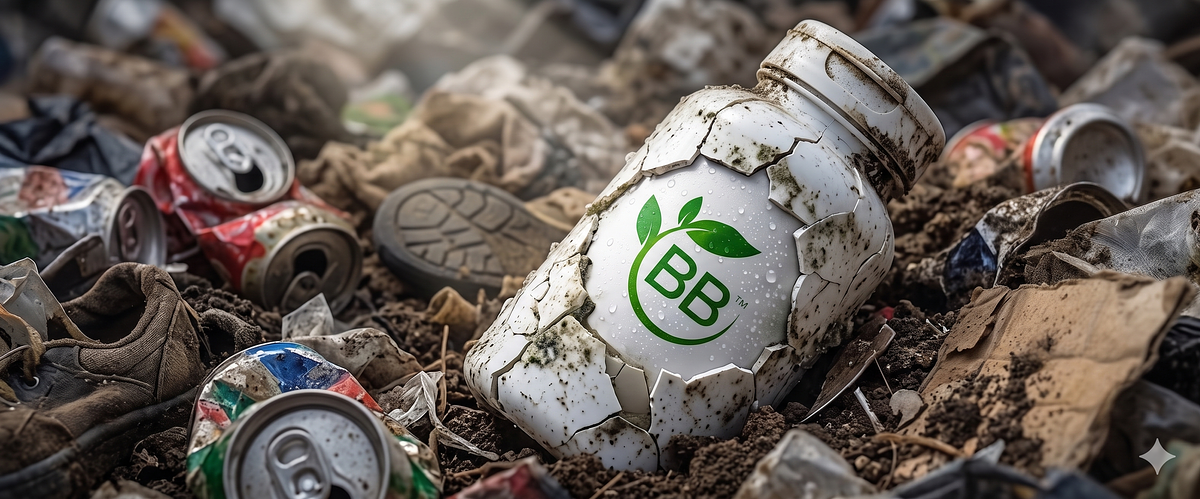
This distinction is not semantic. It is the difference between a defensible claim and a regulatory problem. Oxo-degradable plastics fragment under environmental stress but do not undergo microbial assimilation. They produce persistent microplastic particles, which is precisely the outcome regulators and consumers are trying to avoid. The EU Single-Use Plastics Directive (2019/904) restricts oxo-degradable plastics for this reason. Oxo-biodegradable plastics, the category in which PlasticIQ® operates, go further. Oxidation reduces molecular weight to a level where bacteria can consume the material—but only after the packaging has escaped containment and been exposed to environmental conditions. ASTM D6954 Tier 2 testing specifically measures CO2 evolution and microbial assimilation to confirm this second stage actually occurs. Tier 3 confirms no harmful residues remain. That is the full three-tier verification that makes the claim credible.
What the Science Says About Why This Matters
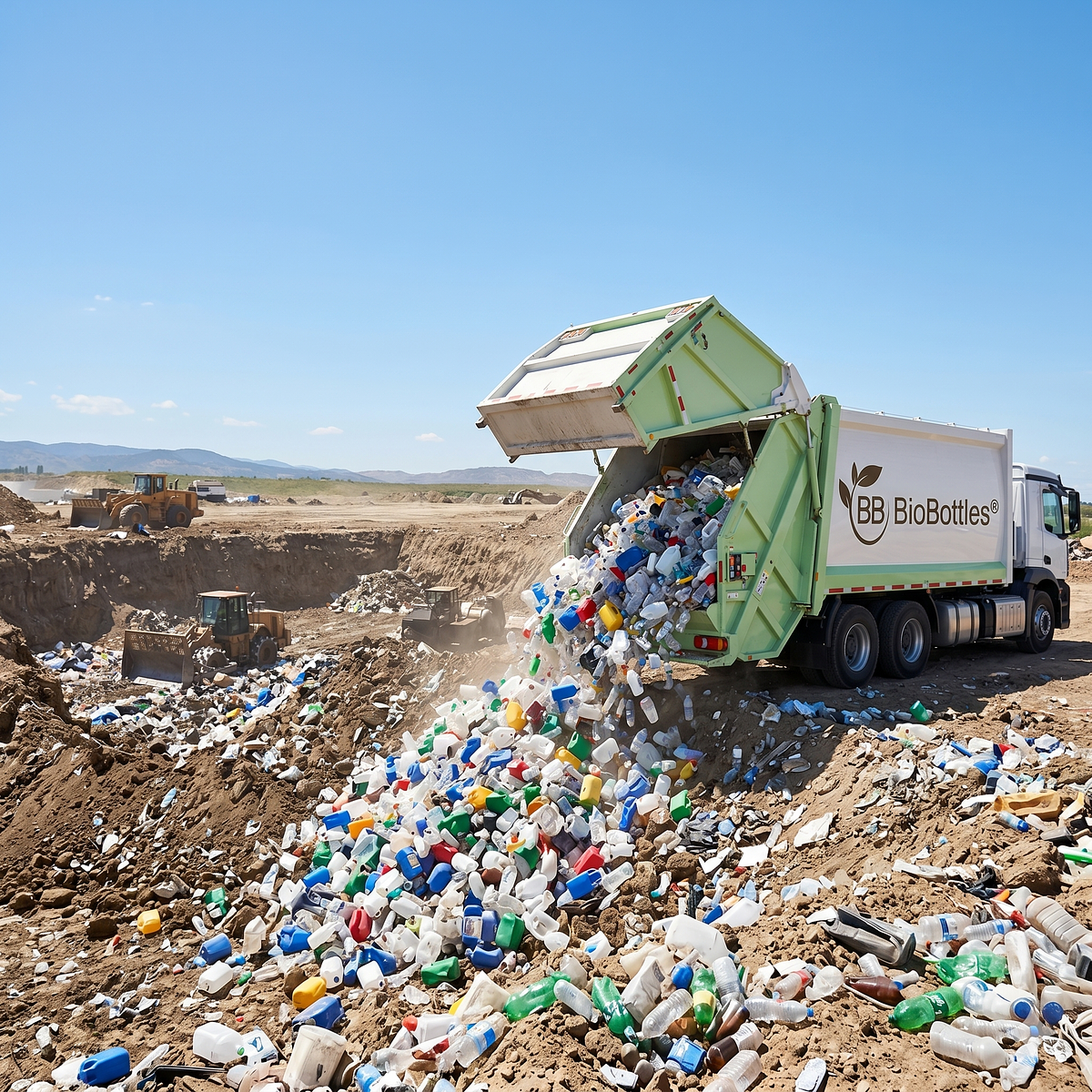
A 2024 study published in the New England Journal of Medicine found that patients with microplastics or nanoplastics detected in carotid arterial plaque had a 4.5 times higher risk of heart attack, stroke, or death within 34 months compared to those without detectable particles. Separately, a 2026 study from researchers at Fudan University and Duke University, published in Nature Climate Change, found that microplastics floating on ocean surfaces darken the water and increase solar heat absorption, contributing a warming effect estimated at approximately 16% of the impact of black carbon in affected regions. These are not hypothetical risks. They are peer-reviewed findings. Packaging that verifiably prevents persistent microplastic formation addresses a documented problem with human health and climate consequences.
What Brands Can Actually Say
For brand owners building sustainability communications, the practical question is which claims survive legal and regulatory scrutiny. The following have been validated for use on BioBottles® and BioCaps®: 'Scientifically verified under ASTM D6954 Tier 1-3 testing to prevent the formation of persistent microplastics if packaging escapes containment.' 'Engineered to help reduce persistent microplastic formation if packaging escapes containment.' 'Contains PlasticIQ® technology that initiates controlled oxidation when exposed to environmental conditions.' 'Recyclable through existing recycling systems when properly disposed and collected. Local programs may vary.' 'FDA food-contact compliant under 21 CFR Sections 177.1520, 178.2010, and 175.300.' Third-party validation comes from Jordi Labs in the United States and international scientific experts, including Professor Telmo Ojeda and CIQA in Mexico.
- Claim must reference a specific testing standard (ASTM D6954 Tier 1-3)
- Claim must be qualified to the condition under which the benefit applies (if packaging escapes containment)
- Recyclability claims must always include 'local programs may vary' per California SB 343
- Never use terms such as biodegradable, compostable, or eco-friendly without the substantiation and qualifications those terms require
- Third-party laboratory validation strengthens defensibility against FTC scrutiny
The Bottom Line for Procurement and Formulation Teams
Saying plastic packaging prevents microplastics is not greenwashing when the mechanism is real, the testing is rigorous, and the claim is properly scoped. BioBottles® and BioCaps® with PlasticIQ® technology meet that standard. The claim is verified under ASTM D6954 Tier 1-3 (2024 Edition), validated by independent laboratories, compliant with FTC Green Guides and California SB 343, and qualified to the specific condition of environmental escape. That combination is what separates science-backed sustainability from marketing fiction. Brands that want to make credible, defensible microplastic-prevention claims have a clear path. Visit gogreenfrog.com to review the technical documentation and testing data for BioBottles® and BioCaps®.
Related reading
- Oxo-Biodegradable vs. Oxo-Degradable Plastic: Why the Difference Defines Your Microplastic Risk Learn the critical difference between oxo-degradable and oxo-biodegradable plastics, and how BioBottles® with PlasticIQ® technology prevents persistent microplastic formation—verified under ASTM D6954 Tier 1-3 testing.
- Oxo-Biodegradable vs. Oxo-Degradable Plastic: Why the Distinction Matters for Your Brand Oxo-degradable plastics create persistent microplastics. Oxo-biodegradable BioBottles® with PlasticIQ® technology complete bacterial assimilation, verified under ASTM D6954 Tier 1-3. Learn the science and the regulatory difference.
- How Packaging Companies Can Reduce Microplastic Formation From Their Products Packaging companies can reduce microplastic formation by adopting PlasticIQ® technology, validated under ASTM D6954 Tier 1-3 testing. Learn how BioBottles® and BioCaps® are engineered to help prevent persistent microplastic fragments if packaging escapes containment.