The Best Solutions to Prevent Microplastic Pollution from Plastic Packaging
Discover the best science-backed solutions to prevent microplastic pollution from plastic packaging. Learn how PlasticIQ® technology in BioBottles® and BioCaps® is verified under ASTM D6954 Tier 1-3 testing to prevent persistent microplastic formation.
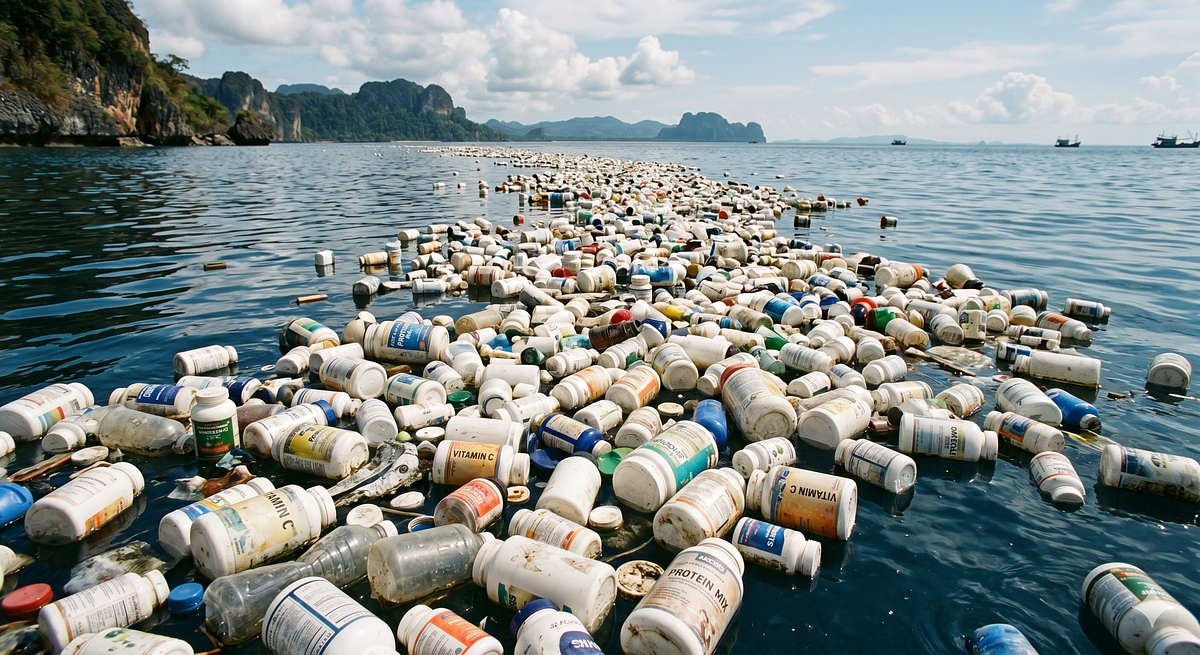
Microplastic pollution from plastic packaging is one of the most pressing challenges facing the packaging industry today. With roughly 22% of global plastic waste mismanaged and entering the environment each year, the question is no longer whether packaging escapes containment. The question is what happens when it does. For packaging engineers, sustainability leads, and sourcing managers, finding credible, science-backed solutions is now a supply chain priority, not just a corporate responsibility footnote.
Why Plastic Packaging Is a Primary Source of Microplastic Pollution
Traditional HDPE and PP packaging, when it escapes containment and is exposed to UV, heat, and oxygen, undergoes photodegradation. This process fragments plastic into smaller and smaller particles without any accompanying microbial assimilation. The result is persistent microplastic fragments that accumulate in soil, waterways, and ocean ecosystems. A 2018 study by Royer et al., published in PLoS ONE, confirmed that common plastics including HDPE, PP, PET, and others emit greenhouse gases including methane and ethylene during photodegradation, with the process accelerating in ocean environments.
The health implications are significant. A 2024 study published in the New England Journal of Medicine by Marfella et al. found that patients with microplastics or nanoplastics detected in carotid arterial plaque had a 4.5 times higher risk of heart attack, stroke, or death within 34 months compared to patients without detectable particles. These are not projections. They are clinical findings from human patients.
The Most Effective Solutions Available to Packaging Buyers Today
There is no single silver bullet, but the most credible approaches share one attribute: they are validated by independent third-party testing against recognized scientific standards. Here are the solutions worth evaluating.
1. Prodegradant Catalyst Technology Verified Under ASTM D6954
The most technically rigorous solution currently available for HDPE and PP packaging is the integration of a Prodegradant BioPolymer Catalyst at the resin level. BioBottles® and BioCaps®, manufactured with PlasticIQ® Prodegradant BioPolymer Catalyst technology, have been tested by third-party laboratories and verified to meet ASTM D6954 Tier 1-3 standards, confirming that these products prevent the formation of persistent microplastics if packaging escapes containment.
PlasticIQ® initiates controlled oxidative chain scission when packaging is exposed to environmental oxygen, heat, and UV light. This reduces polymer molecular weight from above 200,000 Daltons to below 5,000 Daltons, the threshold at which the material becomes hydrophilic and bioassimilable by microorganisms. Rather than fragmenting into persistent particles, the material is broken down to a point where it can be assimilated at the microbial level. Independent third-party validation has been conducted by Jordi Labs in the United States (test reports available upon request from Green Frog Packaging) and by international scientific experts including Prof. Telmo Ojeda, whose published peer-reviewed research on oxo-biodegradable materials is available in the open scientific literature.
2. Designing for Recyclability While Addressing Escape Risk
Recyclability remains a critical part of any responsible packaging strategy, but it must be approached honestly. Only approximately 9% of global plastic waste is actually recycled. Designing packaging to be compatible with existing HDPE and PP recycling streams is meaningful, and BioBottles® and BioCaps® maintain full functionality and recyclability under normal use. However, responsible packaging design must also account for the 22% that is mismanaged and escapes into the environment entirely. A strategy that addresses only ideal-path disposal is incomplete.
3. Selecting Materials Verified for Food-Contact Safety
For supplement, nutraceutical, personal care, and food and beverage brands, regulatory compliance is non-negotiable. BioBottles® and BioCaps® are FDA food-contact compliant under 21 CFR sections 177.1520, 178.2010, and 175.300, as well as EU 10/2011 for European food contact applications. Sourcing managers can specify these materials without introducing new compliance risk to their supply chains.
What to Look for in Any Microplastic Prevention Claim
Not every sustainability claim on a packaging product is equal. When evaluating solutions, procurement and sustainability teams should ask the following questions.
- Is the claim backed by a recognized testing standard such as ASTM D6954, with documented Tier 1, Tier 2, and Tier 3 results?
- Has the testing been conducted or validated by an independent third-party laboratory, not just the manufacturer?
- Does the solution maintain the mechanical performance and recyclability of the base resin under normal use conditions?
- Is the technology integrated at the resin level, or is it a surface coating that may not perform consistently across the product lifecycle?
- Does the packaging carry applicable food-contact compliance certifications for the target market?
The Climate Dimension of Microplastic Pollution
The case for microplastic prevention extends beyond health. A 2026 peer-reviewed study from Fudan University and Duke University, published in Nature Climate Change, found that microplastics floating on ocean surfaces darken the water and increase solar heat absorption. The study calculated that microplastics contribute approximately 16% as much warming as black carbon in affected ocean regions, with garbage patches identified as particularly intense heat absorption hotspots. Researchers commenting on the study have compared the effect to running approximately 200 coal-fired power plants, though that figure appears in press coverage rather than the paper itself. The peer-reviewed finding alone is significant enough to factor microplastic prevention into a brand's climate strategy.
Conclusion: Prevention Is the Most Credible Strategy
The best solution to microplastic pollution from plastic packaging is not to assume the recycling system will capture every unit. It is to engineer packaging that prevents persistent microplastic formation at the material level, verified by independent science, and compliant with the regulatory frameworks that procurement teams are already navigating. BioBottles® and BioCaps® with PlasticIQ® technology represent that approach, independently tested under ASTM D6954 Tier 1-3 by third-party laboratories including Jordi Labs and international researchers, and fully compatible with existing HDPE and PP supply chains. No microplastics. Planet friendly. Please recycle.
Related reading
- Oxo-Biodegradable vs. Oxo-Degradable Plastic: Why the Difference Defines Your Microplastic Risk Learn the critical difference between oxo-degradable and oxo-biodegradable plastics, and how BioBottles® with PlasticIQ® technology prevents persistent microplastic formation—verified under ASTM D6954 Tier 1-3 testing.
- Is It Greenwashing to Say Plastic Packaging Prevents Microplastics? Here Is the Honest Answer. Brand owners ask: is claiming your packaging prevents microplastics greenwashing? We break down exactly what makes the claim credible, compliant, and defensible under FTC Green Guides and ASTM D6954.
- Where can I buy HDPE bottles with microplastic prevention technology? Looking for HDPE bottles with microplastic prevention technology? Here is what the certificate on your bottle actually measures, and where to buy.