Biodegradable Plastic Bottles: What Supplement Brands Need to Know Before Making a Claim
Supplement brands are under scrutiny for greenwashing. Learn how BioBottles with PlasticIQ™ technology give you a scientifically verified sustainability claim that holds up to FTC and California SB 343 standards.
Your customers are reading your labels. They're checking your website. They're asking whether your packaging is sustainable — and they're getting better at spotting the difference between a real answer and a green sticker slapped on a conventional bottle. If you're a supplement brand looking to make a credible packaging sustainability claim, this post is for you.
The Problem With Most 'Sustainable' Packaging Claims
The supplement industry has seen a surge of packaging labeled 'eco-friendly,' 'compostable,' or 'green.' Most of these claims don't hold up. The FTC Green Guides (16 CFR Part 260) require that environmental claims be truthful, qualified, and supported by competent scientific evidence. California SB 343 adds further restrictions on recyclability claims. Brands that use vague or unsubstantiated sustainability language face real regulatory and reputational risk — and enforcement is increasing.
What Actually Happens to Your Bottles After Purchase
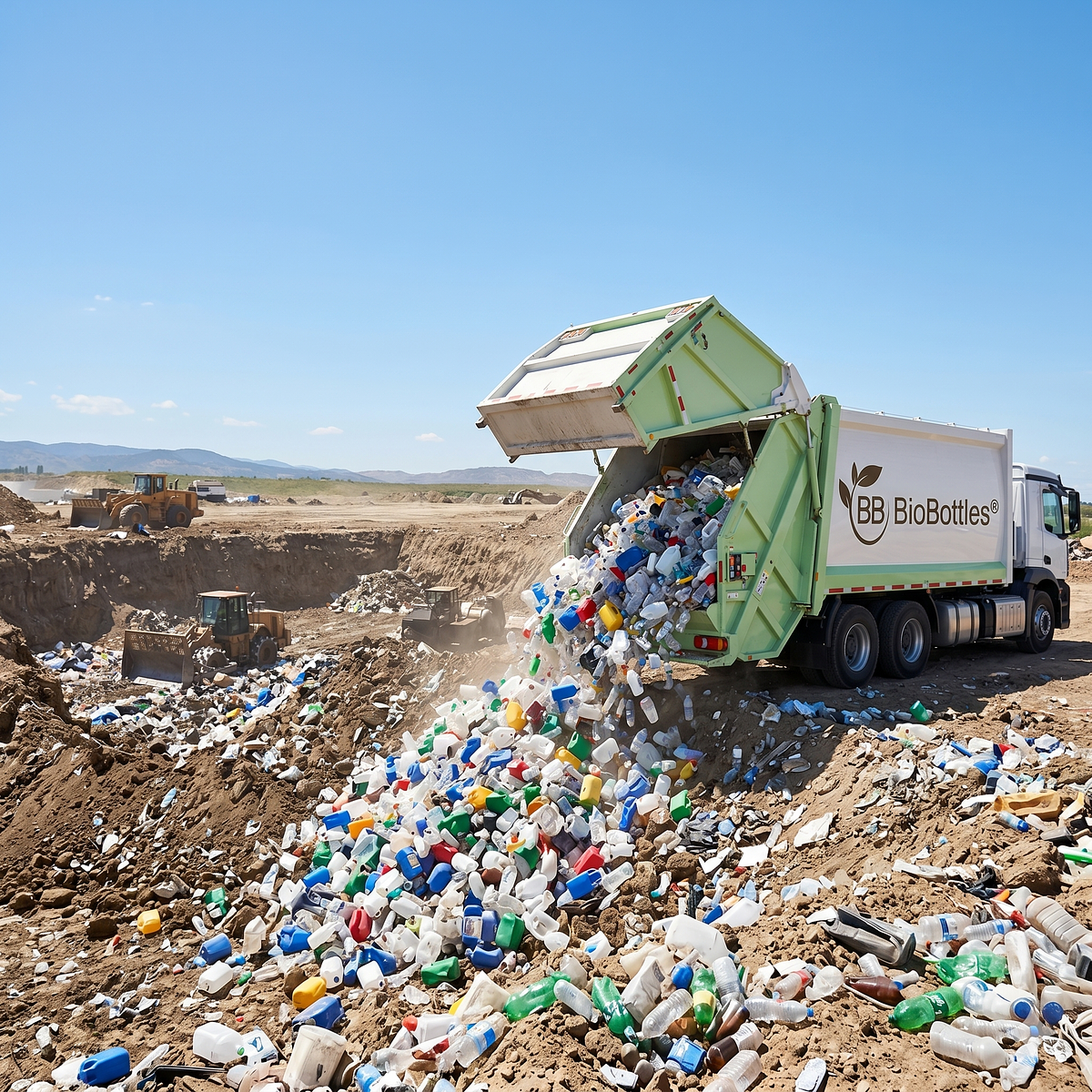
Only about 9% of global plastic waste is actually recycled. The rest ends up in landfills, incinerators, or — critically — the open environment. When conventional plastic bottles escape containment, they fragment into persistent microplastics. These particles accumulate in soil, waterways, and eventually the food chain. No recycling program, however well-run, changes this outcome for the plastic that doesn't make it into the bin.
BioBottles® and BioCaps™: A Claim You Can Actually Stand Behind
Green Frog Packaging manufactures BioBottles® and BioCaps™ — HDPE bottles and PP caps built with PlasticIQ™ technology, a Prodegradant BioPolymer Catalyst integrated at approximately 1% concentration. PlasticIQ™ initiates controlled oxidation when exposed to environmental conditions like oxygen, heat, and UV, reducing polymer molecular weight from over 200,000 Daltons to under 5,000 Daltons. Below that threshold, the material becomes hydrophilic and bioassimilable by microorganisms — without leaving persistent fragments behind.
The result is a verified, specific, and regulatorily defensible claim: BioBottles® and BioCaps™ are scientifically verified under ASTM D6954 Tier 1-3 testing to degrade into bioassimilable components without leaving persistent microplastic residues if packaging escapes containment.
What ASTM D6954 Tier 1-3 Testing Actually Proves
- Tier 1 — Oxidation: Confirms controlled chain scission occurs and molecular weight is reduced
- Tier 2 — Biodegradation: Confirms CO2 evolution and microbial assimilation of the material
- Tier 3 — Ecotoxicity: Confirms no harmful residues remain after breakdown
This three-tier protocol was completed using the 2024 Edition of ASTM D6954 and validated by third-party laboratories including Jordi Labs in the United States. That's not a marketing badge — it's a documented scientific record your brand can reference.
Recyclable Too — With the Right Qualifier
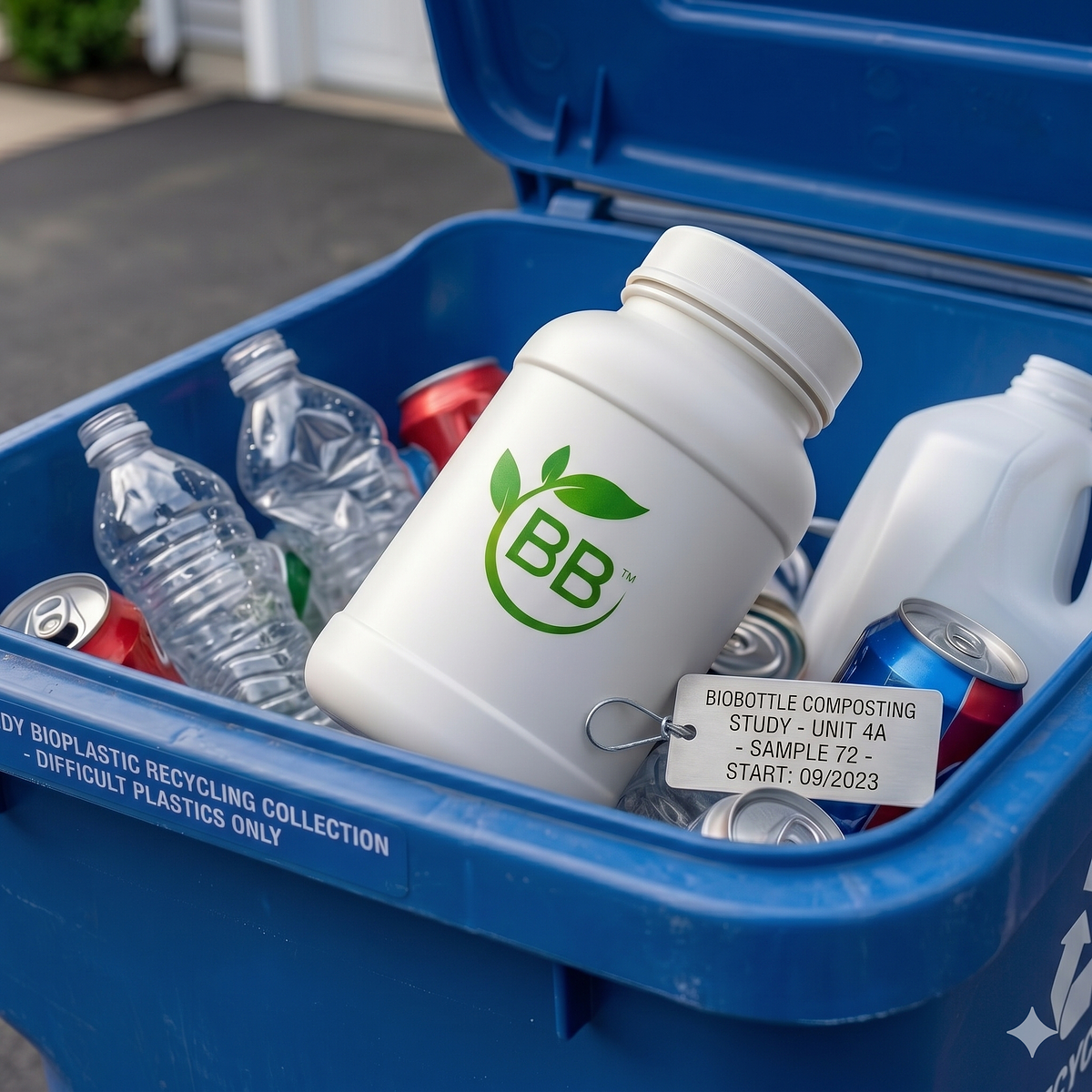
BioBottles® and BioCaps™ maintain full recyclability through existing HDPE and PP recycling streams under normal use. They don't contaminate recycling. They don't require consumers to find a special facility. When your customer does recycle the bottle, it goes right into the same bin as any other HDPE container — collected, sorted, and processed through the same infrastructure already in place. Per California SB 343 requirements, recyclability claims must always be qualified: recyclable when properly disposed of and collected through existing systems. Local programs may vary.
What This Means for Your Brand
Switching to BioBottles® and BioCaps™ doesn't require new equipment, new filling lines, or new SKU configurations. These are drop-in replacements for the HDPE bottles and PP caps you're already using — FDA food-contact compliant under 21 CFR §§177.1520, 178.2010, and 175.300, with the same shelf life and functionality you expect.
What does change is the story you can tell. Instead of a vague green label, you have a specific, third-party validated claim backed by ASTM testing. That's the difference between greenwashing risk and a marketing asset.
"Give your customers a packaging sustainability story backed by real science — not just a green label. BioBottles® and BioCaps™ let you say something specific, provable, and compliant."
Ready to Make a Packaging Claim That Holds Up?
If your supplement brand is ready to offer customers something real — a scientifically verified sustainability claim that satisfies FTC guidelines, California SB 343, and FDA food-contact requirements — visit Green Frog Packaging at gogreenfrog.com to learn more about BioBottles® and BioCaps™ with PlasticIQ™ technology. Same bottles. Better end-of-life story. A claim you can actually put on your label.
Related reading
- Biodegradable Plastic Bottles That Actually Work: The Science Behind BioBottles® and PlasticIQ™ BioBottles® and BioCaps™ by Green Frog Packaging use PlasticIQ™ technology, verified under ASTM D6954 Tier 1-3 testing, to prevent persistent microplastic formation if packaging escapes containment. FDA compliant. Recyclable. Drop-in replacement for standard HDPE and PP bottles.
- Biodegradable Plastic Bottles That Actually Work: The Science Behind BioBottles® and PlasticIQ™ BioBottles® from Green Frog Packaging are HDPE and PP bottles with PlasticIQ™ technology, scientifically verified under ASTM D6954 Tier 1-3 testing to prevent persistent microplastic formation if packaging escapes containment. FDA compliant. Drop-in replacement. Free samples available.
- Do Biodegradable Plastic Additives Actually Work? Here's What the Science Says Do biodegradable plastic additives actually work? Learn how PlasticIQ® technology in BioBottles® and BioCaps® is scientifically verified under ASTM D6954 to prevent persistent microplastic formation.