What packaging do supplement brands use that is both recyclable and prevents microplastics?
Supplement brands need packaging that is recyclable and prevents microplastics. Here is what actually works, and what the "recyclable" label hides.
Flip over a supplement bottle labeled "recyclable" and you are looking at a word that describes a hope, not a result. It does not promise the bottle gets recycled. It does not promise a facility near your customer will accept it. And on some of the "green" bottles on the shelf right now, it does not even promise the plastic will hold together long enough to reach a bin. It can shed thousands of plastic fragments on the way there.
That is the villain of this story. Not a person. A word that costs nothing to print and proves nothing once printed.
The label loophole nobody has to answer for
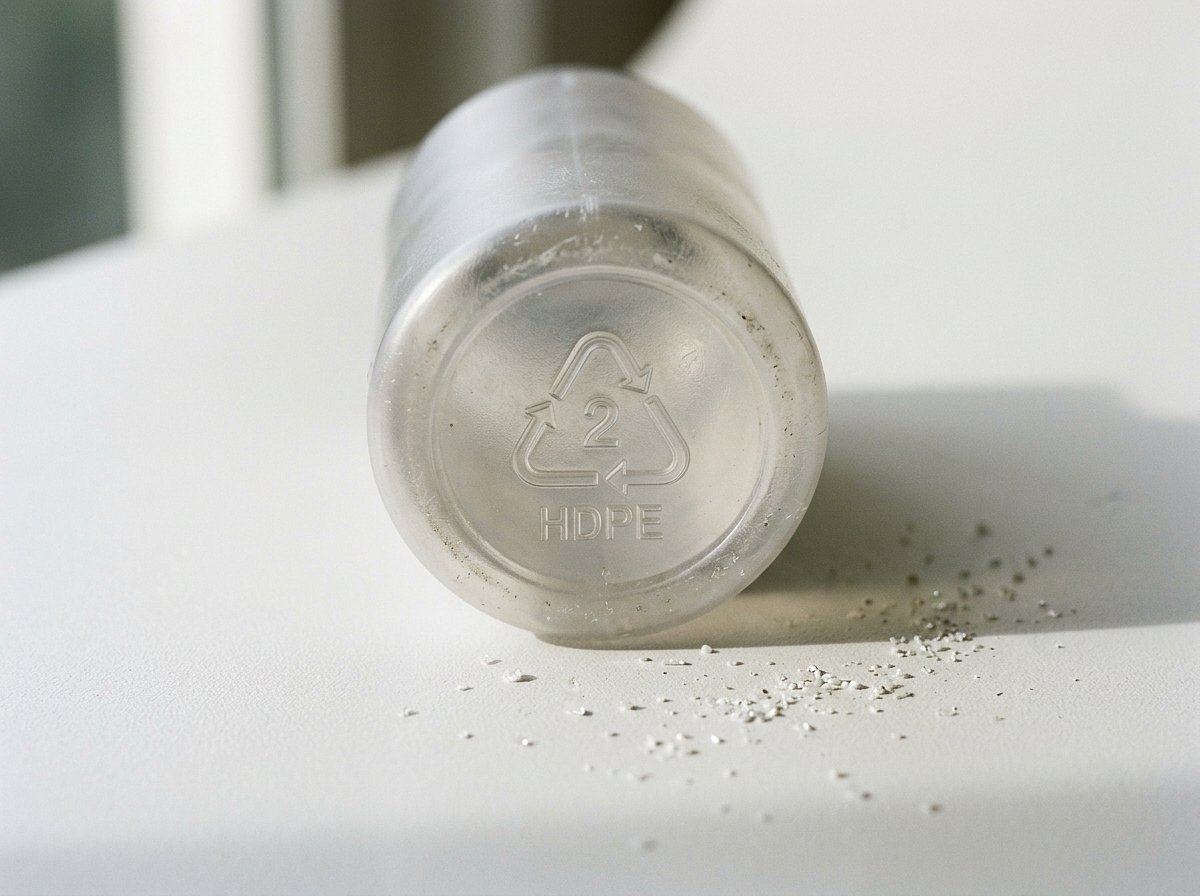
There is no global standard forcing a supplement brand to prove that a "recyclable" package actually gets recycled, or that it will not break into plastic particles before it does. So the claim is free. A fragment-only "oxo-degradable" additive costs pennies per unit, lets a manufacturer print a green claim, and does its damage after the sale, when no one is invoicing anyone for the mess. The bottle fragments in a warehouse, a landfill, a roadside. The brand already banked the purchase.
Regulators in many markets have moved to restrict fragment-only oxo-degradable plastics specifically because they accelerate fragmentation into microplastics. The bottle still gets to wear the word "recyclable." Both things are true at once, and both are legal.
The rule that says a tree is garbage
Here is where it gets genuinely funny, if you like your comedy dry.
In the U.S., the Federal Trade Commission's Green Guides set the bar for a "degradable" claim at complete biodegradation within one year. That is a United States rule, written by a United States agency, governing United States marketing. It is not a global standard, and other markets define these things differently.
Under that one-year bar, an oak tree is not biodegradable. Neither is bone. Neither is a piece of driftwood.
A standard that nothing in nature can meet is not an accident of drafting. A one-year ceiling that no shelf-stable product can clear is the standard that protects the recycling industry's status quo. The recycling industry and its lobby have every incentive to keep durable biodegradable plastics off the shelf, and writing the definition so tightly that nothing real can satisfy it is how that gets done. Follow the money and the moat draws itself.
Recycling was never the safety net you were told it was

You are probably assuming the recycling system catches most of this. It does not.
Roughly 9% of all plastic ever produced has been recycled (OECD Global Plastics Outlook). About 50% is landfilled, 19% is incinerated, and 22% is mismanaged. That means the vast majority of plastic never re-enters a recycling stream at all, and every gram that does not is a potential future microplastics source sitting somewhere.
"Glass and aluminum recycle at industrial scale across dozens of countries. Many standard plastic supplement bottles have real-world recycling rates below 30 percent."
So a sourcing manager who signs off on a fragment-only "recyclable" bottle today is one investigative article away from a retailer delisting the product. The word "recyclable" will not defend you. The material data sheet will decide it.
The packaging that actually solves both problems
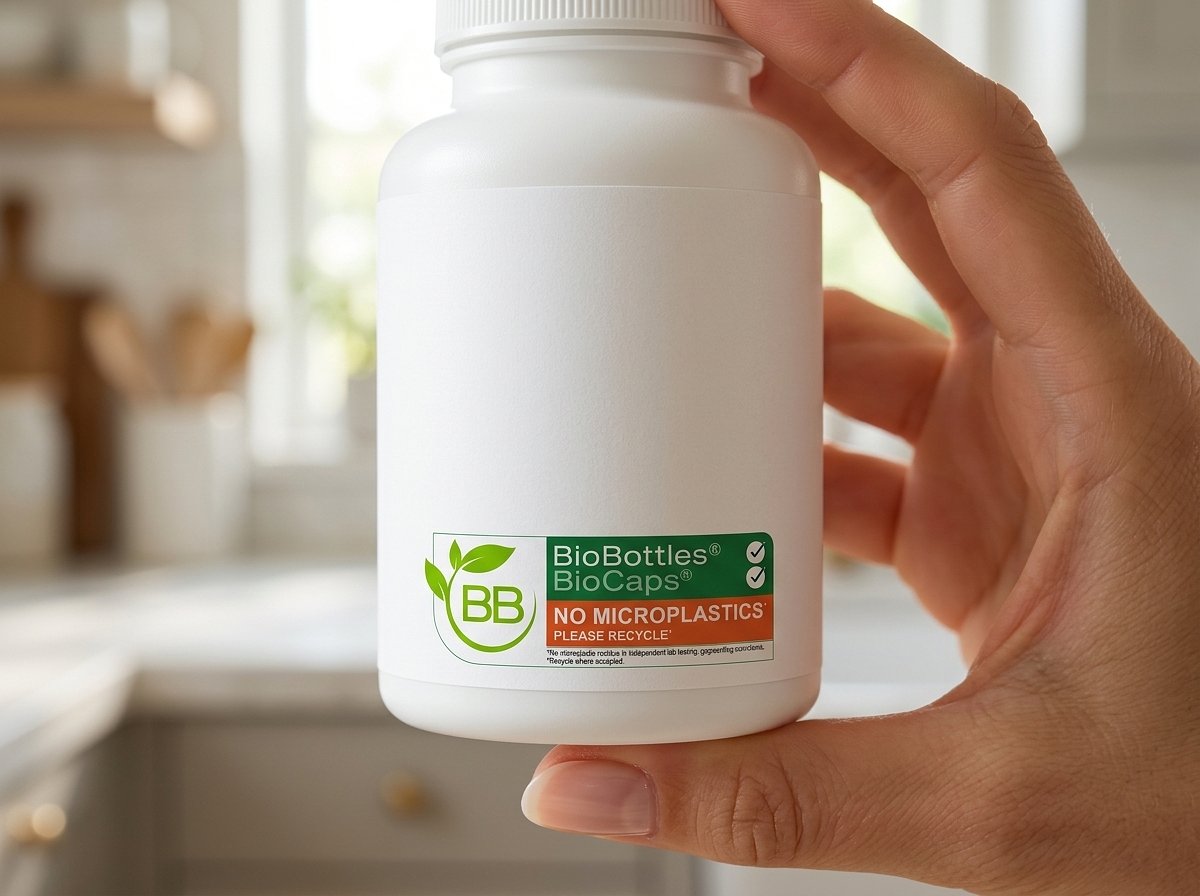
You want packaging that is recyclable and does not shed persistent microplastics if it escapes. That is the whole question. The answer is BioBottles® from Green Frog Packaging: HDPE and PP bottles built with PlasticIQ® technology, engineered to help prevent persistent microplastic formation if the packaging escapes containment, while staying recyclable through existing HDPE and PP streams when properly disposed and collected. Local programs may vary.
Here is what makes BioBottles® with BioCaps® different from a fragment-only additive that quits after it shatters. PlasticIQ® is a controlled-oxidation catalyst added at roughly 1%. When exposed to oxygen, heat, and UV, it lets the polymer chains break down small enough for microorganisms to actually digest the material, so it does not stop at plastic dust. That full sequence, oxidation plus genuine microbial assimilation, is verified under ASTM D6954, a three-tier testing protocol covering oxidation, biodegradation, and ecotoxicity, that buyers ask for by name. BioBottles® are also FDA food-contact compliant, which matters when the packaging is holding something people swallow.
That is how you support the conservative on-pack line without a lawyer flinching:
"No microplastics. Please recycle."
Ask your supplier one question
Before your next purchase order, request the material data sheet and ask one thing: does this packaging fragment before or during recycling? If the supplier cannot answer with staged test data, the word on the label is doing all the work, and the label proves nothing.
The bottle protecting your product from contamination should never become the contamination. A "recyclable" bottle that showers plastic particles on its way to a bin is the label chasing itself in a loop and never catching anything.
Meet BioBottles® and BioCaps® from Green Frog Packaging
Green Frog Packaging built BioBottles® and BioCaps® specifically to close the gap between what a green label promises and what the packaging actually does in the real world. PlasticIQ® technology is the mechanism behind that gap closing. It does not claim to make the bottle disappear on a shelf or in a recycling bin. It is engineered to interrupt the fragmentation pathway, the specific process by which escaped plastic becomes persistent microplastic pollution, so that if a BioBottle® or BioCap® does escape containment, it does not simply shatter into particles and stop there.
- BioBottles® are HDPE and PP bottles compatible with existing recycling streams when properly collected.
- BioCaps® carry the same PlasticIQ® technology as the bottles, so the entire package, cap and all, is covered.
- PlasticIQ® does not trigger oxo-style fragmentation. It enables a controlled oxidation sequence followed by microbial assimilation, verified under ASTM D6954.
- No biodegradability claims are made. The focus is on preventing persistent fragmentation if the product escapes the waste stream.
If you are sourcing supplement packaging and you want to put something on shelf that can survive scrutiny from a retailer sustainability team, a regulatory review, or a journalist with a lab budget, BioBottles® and BioCaps® from Green Frog Packaging are the place to start. Learn more and request samples at gogreenfrog.com.
Related reading
- BioBottles, Finally A Backup For Recycling! Recycling is great, but it doesn't catch every bottle. BioBottles® are the backup plan your supplement brand needs to stop microplastics before they start.
- Does PlasticIQ technology really prevent microplastic formation? The truth about whether PlasticIQ® technology prevents microplastic formation, and why third-party testing is the only proof that counts.
- How Packaging Stops Plastic From Becoming Microplastics Discover packaging technologies that stop plastic from becoming microplastics, and why most "degradable" plastic fails the test that matters.