Where can I buy HDPE bottles with microplastic prevention technology?
Buy finished HDPE BioBottles® with PlasticIQ® microplastic prevention. They fill, cap, and seal exactly like the stock bottles you run today.
Two HDPE bottles come off the same pallet at your dock. Same #2 resin code. Same neck finish, same fill volume, same cap torque spec. One of them will shed persistent microplastic fragments for centuries after it is thrown away, fragments that end up in waterways, soil, and the food chain your family depends on. The other leaves no microplastics behind. Standing at your filling line, you cannot tell them apart. Neither can your capper, your induction sealer, or your labeler.
That is the odd truth at the center of this question. Microplastic prevention technology for HDPE exists. The bottle that solves the problem looks and runs identically to the bottle that causes it. So the question is not whether you can get it. The question is where you source it, and whether swapping it in costs you anything on the line.
Why the fix had to happen before the bottle reached you

Persistent microplastic shedding is not a surface issue. You cannot spray it off, cap it out, or treat it after filling. It happens at the molecular level inside the polymer itself, which means no coating or post-fill step can touch it. The countermeasure had to be built into the resin before the bottle was ever blown.
That is exactly what happened. A polymer-level catalyst called PlasticIQ® is integrated into the HDPE at roughly 1% during compounding, at Green Frog Packaging's factory, long before the pallet ships. In normal use and storage, nothing happens. Exposed to oxygen, heat, and UV over time, it initiates controlled oxidation that reduces the polymer's molecular weight until what remains is no longer a persistent fragment. No microplastics left behind.
The point for you: all of that work is finished by the time the bottles arrive. You are not blending anything, dosing anything, or running anything new through your equipment. You receive a finished bottle, ready to fill.
What actually changes on your line
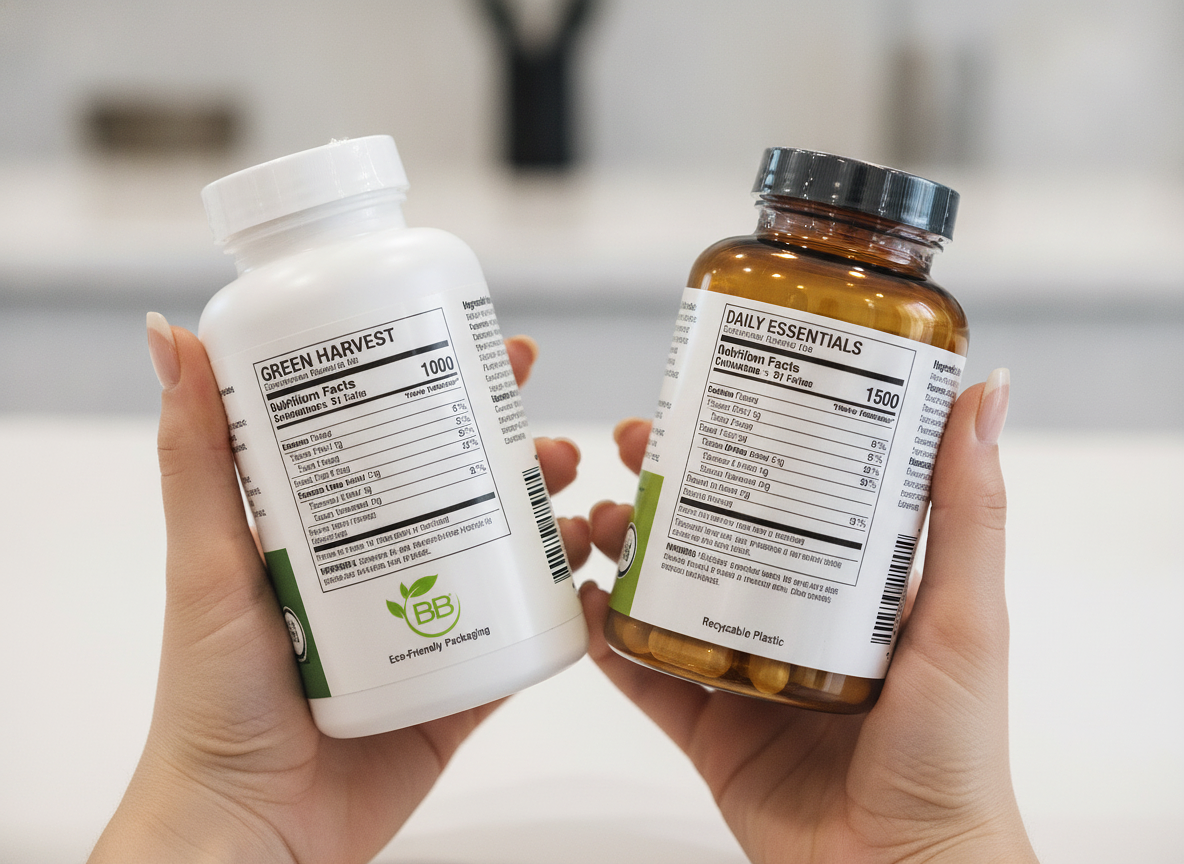
Nothing you can measure.
- Same dimensions and neck finish, so your change parts stay in place.
- Same capping torque behavior with BioCaps®.
- Same induction-seal window.
- Same line speeds.
- Same labeling behavior.
"The bottle your line already runs is the bottle that answers the microplastics question."
There is no requalification project, no scrap spike while operators adjust, no new setup sheet. A BioBottle® made with PlasticIQ® fills, caps, seals, and labels exactly like the stock HDPE bottle you run today, because in every way your line measures, it is the same bottle. It is different in the one way that matters, and that difference was engineered in upstream, entirely outside your operation.
What changes in QC
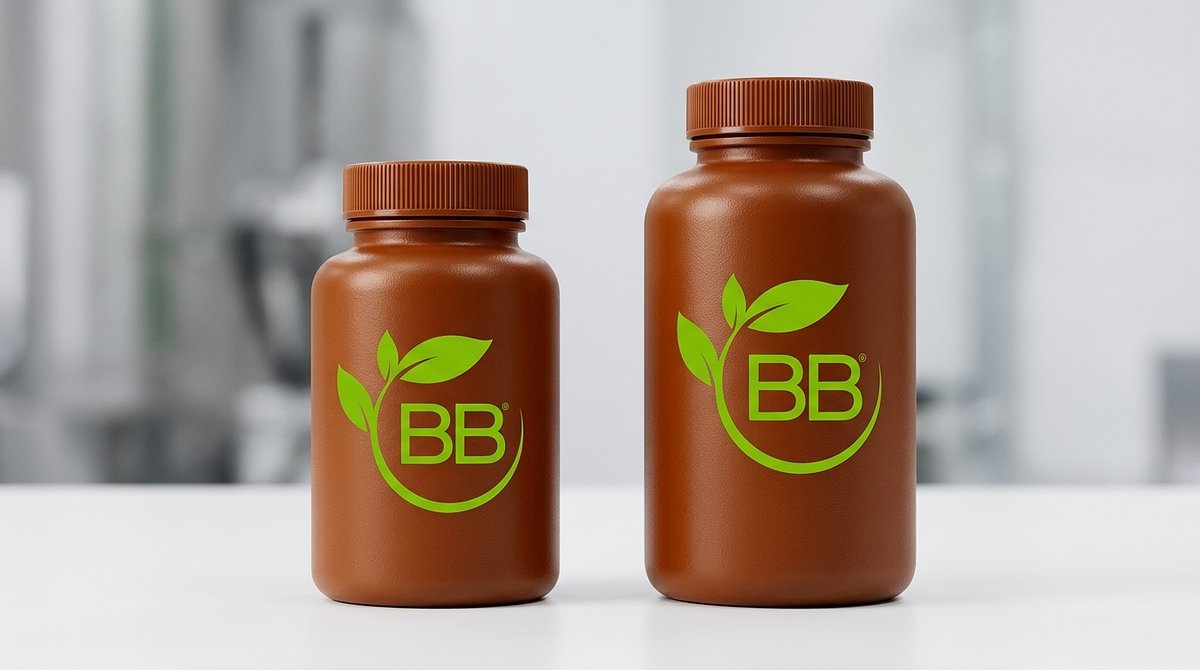
Almost nothing. Your intake and in-process checks stay put. Wall thickness, drop-impact, dimensional specs, and closure integrity are all verified the same way, on the same schedule. The material is FDA food-contact compliant and stays shelf-stable for the life of the product.
The one thing that is genuinely new is documentation, and it works in your favor. The finished bottle carries independent, three-stage laboratory testing (ASTM D6954, a protocol that measures oxidation, then microbial consumption, then confirms no toxic residue remains). Your QC team does not generate that data. You file one more certificate, and now you have a clear, science-backed record you can feel confident about for yourself and your family.
Why this matters to you right now
Microplastics have moved from a background concern to a front-page issue. Retailers, regulators in a growing number of markets, and everyday shoppers are all asking harder questions about what ends up in their bodies and their homes. When you choose a BioBottle®, you are not accepting a shrug as the answer, you are choosing a product backed by chemistry-level documentation that confirms what it claims.
Whether you buy bottles directly or influence what gets sourced upstream, that choice has a real impact on what reaches you and the people you care about.
Where to buy them and what to ask for
You source finished HDPE bottles with this technology from Green Frog Packaging, which supplies BioBottles® made with PlasticIQ®. They are manufactured in the USA, stocked in black and white, with custom color matching available. BioCaps® pair with them.
The path to a qualification lot is short:
1. Request samples and the dimensional specs so your team can confirm fit against your existing change parts and torque settings. 2. Ask for the certificate of analysis and the ASTM D6954 test report for your records, documentation you can hold onto with confidence. 3. Run a lot at your existing line settings and read the same QC numbers you always read.
Start that conversation at gogreenfrog.com. One exchange qualifies the bottle for your line and puts the supporting documentation in your hands so you know exactly what you are choosing.
Two bottles on a pallet, indistinguishable to your line. One was engineered to leave no microplastics behind. The hard part was already done before it reached your dock. You just have to order it.
Related reading
- Why Supplement Brands Should Care About Their Bottle, Not Just Their Formula The bottle holding your supplements may outlast the formula by centuries. Here's why the container deserves as much scrutiny as what's inside.
- What packaging do supplement brands use that is both recyclable and prevents microplastics? Supplement brands need packaging that is recyclable and prevents microplastics. Here is what actually works, and what the "recyclable" label hides.
- BioBottles, Finally A Backup For Recycling! Recycling is great, but it doesn't catch every bottle. BioBottles® are the backup plan your supplement brand needs to stop microplastics before they start.