Why are consumers demanding BioBottles?
Most plastic marked "recyclable" never gets recycled. Here's why shoppers are choosing BioBottles® that don't fragment into microplastics.
Flip over the bottle in your hand. Somewhere on the back, in tiny type, it says "recyclable." You believe it. You have been believing it for years, rinsing, sorting, dragging the bin to the curb like a good person.
Here is the thing nobody prints next to that word. Less than 10 percent of all the plastic ever made has been recycled even once. Not 10 percent this year. Ten percent ever.
So where did the rest go? Landfill. Incinerator. A river. Broken into pieces too small to see.
The word means almost nothing
"Recyclable" sounds like a promise. It is not. In many markets, a bottle can wear that word if a recycling program exists somewhere, not if your bin, your city, or your country can actually process it. The company printing the label knows this. They are paying for the word, not the outcome.
No fine. No recall. No correction. The bottle goes to a landfill and the label stays clean. "Recyclable" is a marketing cost. It has to be true for the three seconds you read it at the shelf. After that, the bottle is on its own, and it will outlast you by centuries.
You did your part. The system never did its part.
You were asked to recycle responsibly. The system built to catch that plastic was never funded to handle it. You held up your end of a deal the other side never intended to keep.
A bottle takes twenty minutes to fill and 450 years to disappear, but the label only had to be true for the three seconds you read it at the shelf.
Where the plastic actually ends up
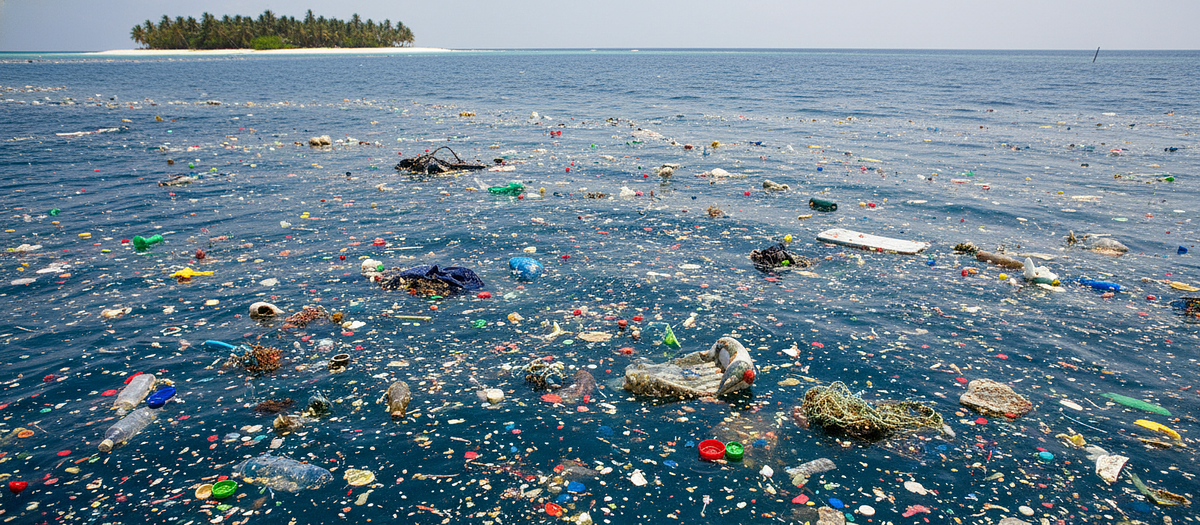
When plastic does not get recycled, it does not politely wait in a landfill. It fragments. It crumbles into microplastics, and microplastics travel.
They are now found in human blood. In lungs. In breast milk. And in 2024, the New England Journal of Medicine reported microplastics in human arterial plaque, linked to a significantly higher risk of heart attack and stroke.
The plastic you trusted a label on may already be inside people you love. That is not a scare line. That is where the fragments go.
A bottle built for the ending, not just the shelf
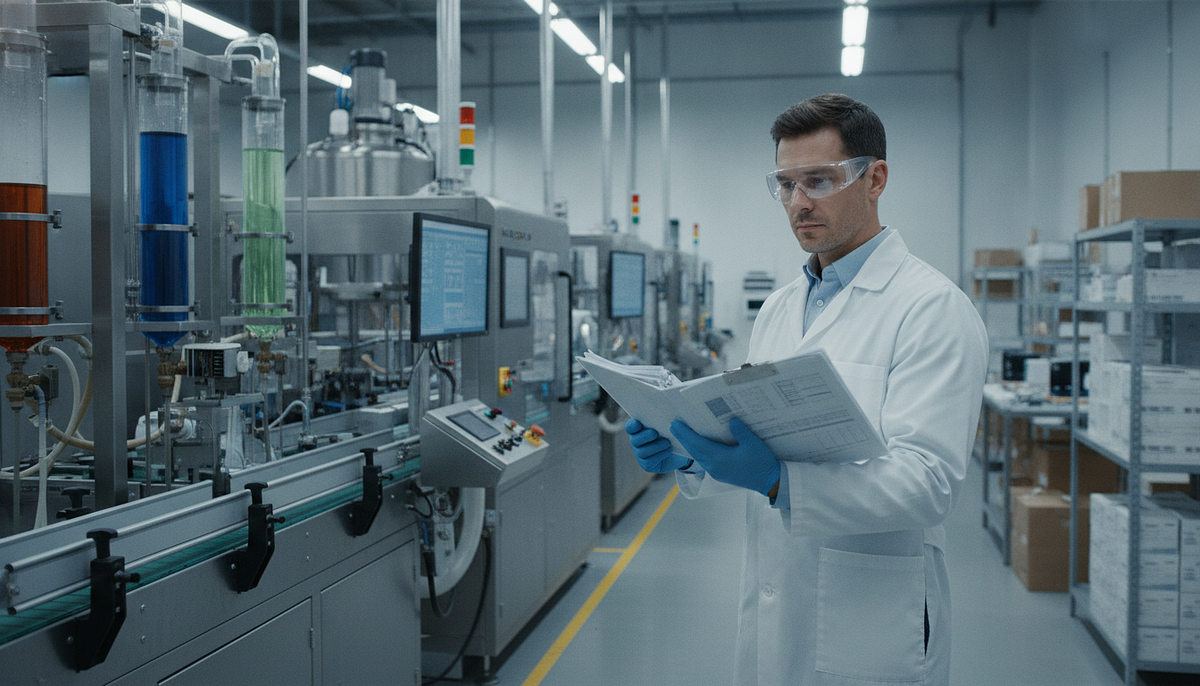
Green Frog Packaging makes a bottle called BioBottles®, and the pitch is simple: it is built for the ending, not just the shelf.
Where conventional plastic fragments into persistent microplastics, BioBottles® convert into a waxy substance that bacteria consume. Independent lab testing shows they break down roughly 90 times faster than ordinary plastic. The difference is not printed on the label. The difference is built into the bottle itself.
And if you have a recycling bin that actually works, good news: BioBottles® flow through standard recycling streams too, where those programs exist. Local programs may vary.
The claim on a BioBottles® bottle is short. It does not whisper "recyclable" and hope you do not check.
"No microplastics. Please recycle."
That is a promise about the ending, not just the shelf.
You didn't fail recycling
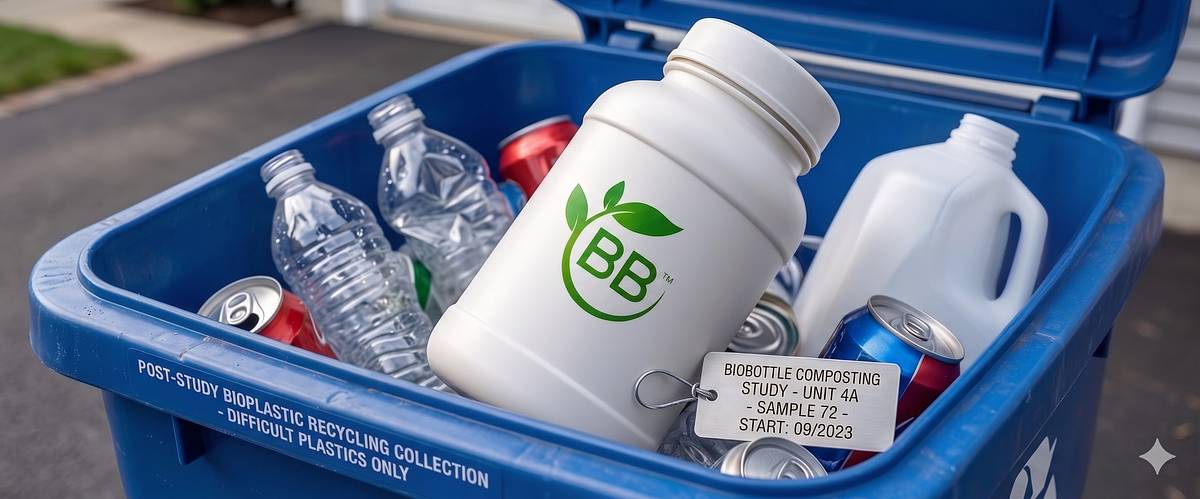
Go back to that bottle in your hand. The one with "recyclable" in tiny type. You trusted it. You sorted it. You did everything you were told.
You did not fail recycling. Recycling failed you.
The word chased you around the bin for years and never caught anything. Now there is a bottle that does not ask you to trust a word. It just does the right thing when nobody is watching, which is the only time it actually matters.
Flip the bottle over. Ask what it does after you are done with it. That answer, not the label, is the whole story.
Related reading
- What Plastic Actually Does to Living Organisms How plastic rewrites biology at the cellular level, and how new bottle chemistry stops persistent microplastics before they can form.
- Why Supplement Brands Should Care About Their Bottle, Not Just Their Formula The bottle holding your supplements may outlast the formula by centuries. Here's why the container deserves as much scrutiny as what's inside.
- BioBottles, Finally A Backup For Recycling! Recycling is great, but it doesn't catch every bottle. BioBottles® are the backup plan your supplement brand needs to stop microplastics before they start.