California SB 54: The Recycling Evidence Behind BioBottles®
A third-party lab tested the actual BioBottles® HDPE bottle to the recycling industry's own protocol and it met every benchmark.
The actual BioBottles® HDPE bottle, the one made with PlasticIQ® technology, was run through the American recycling industry's own test for rigid HDPE packaging by a third-party laboratory, and it passed. AIMPLAS, a plastics-technology institute in Valencia, Spain, evaluated it against the Association of Plastic Recyclers' Critical Guidance Protocol for HDPE Rigid Containers and reported "no disconformities were detected in any of the samples, being all within the APR benchmark." That is the direct answer to the claim you have probably heard. Below is the proof.
The objection sounds like a test result. It is not.
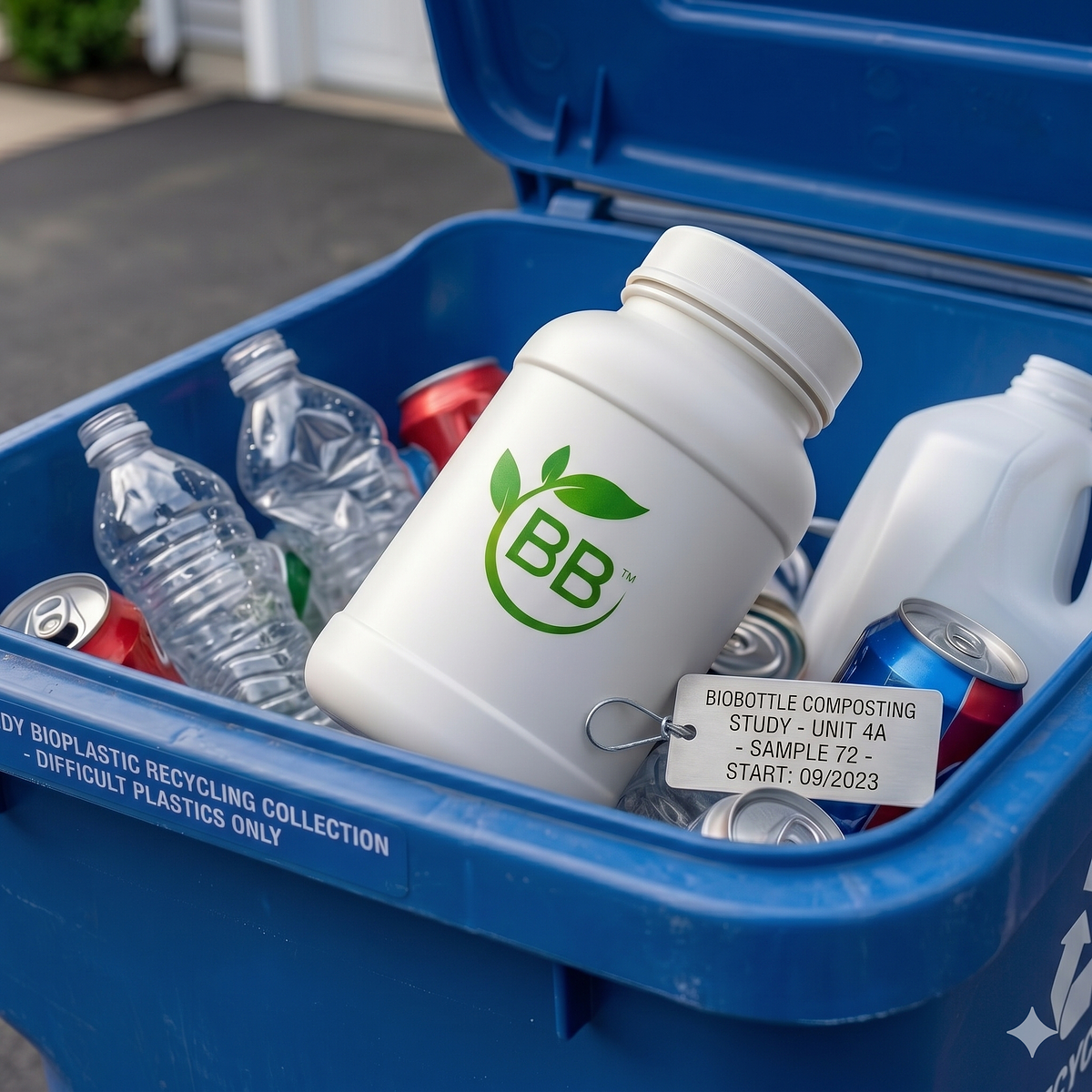
If you buy packaging for a supplement brand, you have likely run into this: on September 18, 2024, the Association of Plastic Recyclers (APR), an industry trade group, issued a formal position categorizing degradable additives as rendering packaging non-recyclable, and it named oxo-biodegradable materials specifically. The statement is widely cited.
It is also a category policy, not a laboratory evaluation. APR's position is a general statement about a whole class of additives. It does not cite a test of a rigid HDPE bottle, ours or anyone's. That distinction matters, because the bottle-specific test exists and it points the other way.
What AIMPLAS actually ran
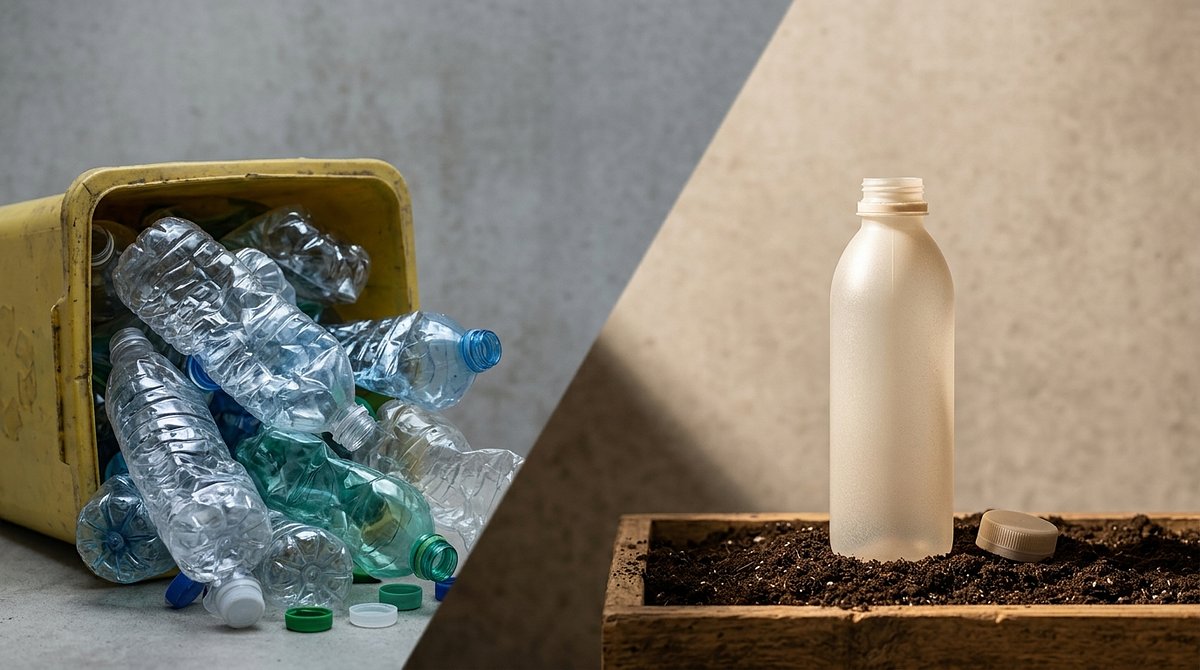
AIMPLAS tested BioBottles® HDPE with PlasticIQ® technology against a regular HDPE packer bottle as the control. The protocol was HDPE-CG-01, the benchmark test American recyclers use to decide whether a new package belongs in their post-consumer HDPE stream, following the colored rigid HDPE pathway. This is report AST-23-203-part1-EN/1, dated 4 December 2023.
The bottles were shredded to 5mm without any problem, washed with a standard commercial wash, and put through a sink/float separation step, the stage that actually sorts material. Both the control and BioBottles® flakes showed 100% flotation, with no sinking particles detected. They were then extruded into pellets and pressed into plaques for mechanical testing.
A quick note on the numbers below. The lab blended BioBottles® material into conventional recycled HDPE at two levels, 25% and 50%. That percentage is how much of the recycled batch was BioBottles® material, not how much additive is in the bottle (the PlasticIQ® catalyst is only about 1% of the plastic). A real municipal stream would contain a fraction of a percent of BioBottles®, so these are deliberately extreme, worst-case proportions.
Here is the plaque data at 50% BioBottles® material against the control:
| Property (method) | Control | 50% BioBottles® | APR benchmark |
|---|---|---|---|
| Tensile strength (ASTM D638) | 27.6 MPa | 27.6 MPa | not worse than −25% |
| Density (ASTM D792) | 0.965 g/cm³ | 0.967 g/cm³ | ≥ 0.941 g/cm³ |
| Elongation at break (ASTM D638) | 270% | 230% (−14.8%) | not worse than −50% |
| Flexural modulus (ASTM D790) | 1300 MPa | 1390 MPa (+6.9%) | < 25% change |
| Izod notched impact (ASTM D256) | Complete break | Complete break | same break type |
At half the batch, tensile strength was identical to the control. AIMPLAS concluded, verbatim from report AST-23-203-part1-EN/1, that "no disconformities were detected in any of the samples, being all within the APR benchmark."
What that means for a real stream
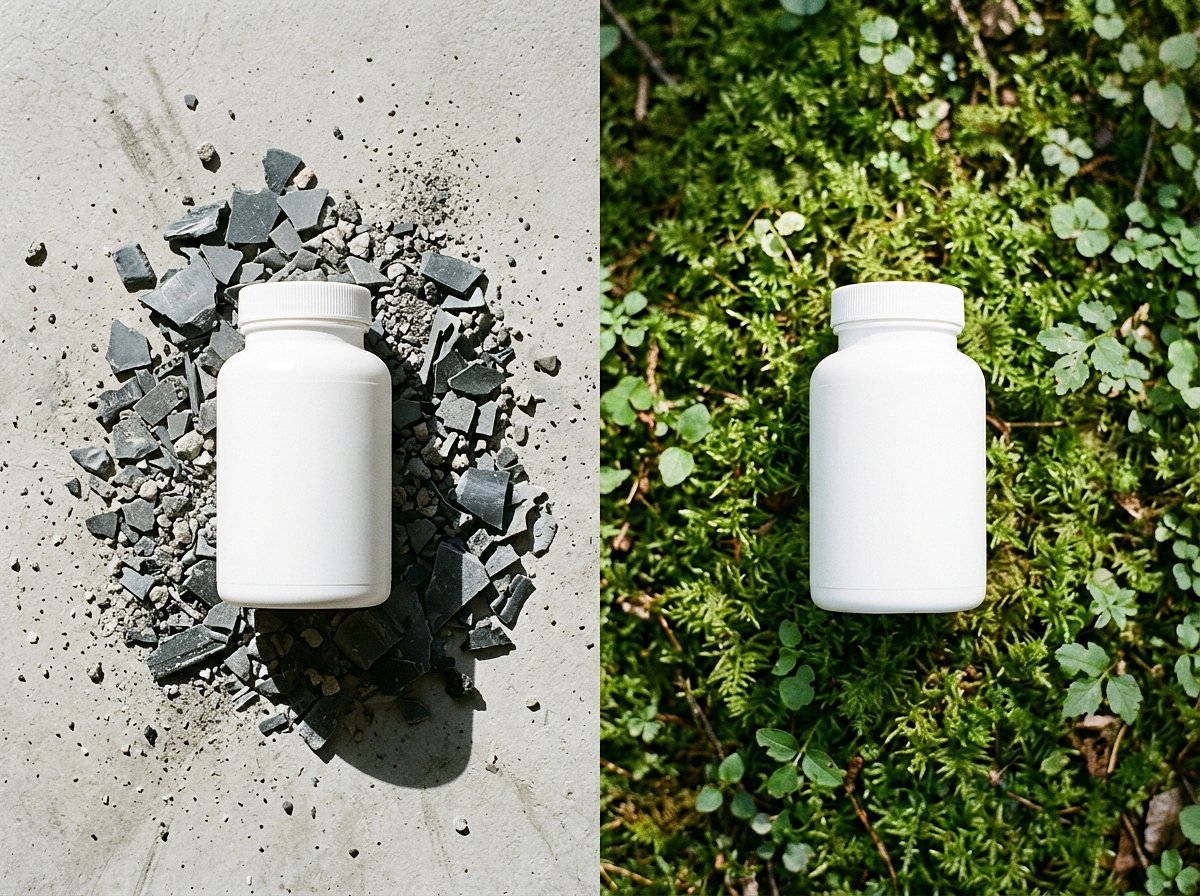
Recyclability is a property of an article moving through a recycling stream, and on the steps a recycler cares about, this bottle behaved like the HDPE it is. It shredded cleanly, floated 100% through sink/float, and held screen-pack pressure well inside the protocol's ceiling, even at proportions no municipal stream would ever see.
One honest note: the report recorded some line breakage during pelletizing from low melt strength. That applied to all samples, including the 100% control. It is a property of the material and the lab line, not of PlasticIQ® technology.
Answering APR directly
APR's September 2024 statement is a general category position about degradable additives. The AIMPLAS evaluation, by contrast, used APR's own published protocol on the actual bottle we sell.
We will volunteer one concession, because it costs nothing and makes the rest more credible: not every property matched the control exactly. Elongation at break and flexural modulus both differed, though both stayed comfortably inside the benchmarks. This is a clean pass, not a claim of perfect parity.
Supporting durability evidence
There is also third-party recycling-durability work. TCKT, a polymer-technology center in Austria, reported in March 2016 that films containing the additive do not show negative effects on film properties through the tested aging period, and concluded the additive is most unlikely to prevent compliance with EN 13430-2004, the European material-recycling standard. That conclusion carries one condition: standard stabilization, which any recycler making longer-life products already adds. Note that the TCKT study tested films; for rigid HDPE bottles, the direct evidence is the AIMPLAS evaluation above.
Where SB 54 fits
California's SB 54, administered by CalRecycle, sets 2032 objectives for covered packaging, with a recyclability requirement built on collection and sorting infrastructure rather than the resin code alone. Ordinary supplement bottles fall within its scope. BioBottles® are HDPE bottles, same resin, same #2 identification, and AIMPLAS confirmed they float exactly as the control does.
The tested BioBottles® rigid HDPE bottle was evaluated by a third-party laboratory to the recycling industry's own protocol, and it met the benchmarks at both proportions tested. The claim that oxo-biodegradable packaging cannot be recycled is a category statement about additives. The bottle-specific result answers it.
To see the reports or request bottles, visit gogreenfrog.com.
Sources: AIMPLAS, APR Technology Validation of HDPE Rigid Containers, report AST-23-203-part1-EN/1, 4 December 2023. Burgstaller, C. & Reisecker, V., TCKT, 17 March 2016.
Sources
Reports and publications discussed in this article. Links lead to the report or its publisher; each finding applies to the materials and conditions tested.
Related reading
- Are BioBottles from Green Frog Packaging accepted by US recycling facilities? BioBottles® from GreenFrog Packaging passed the APR recyclability protocol US facilities use, tested by AIMPLAS on the actual rigid HDPE bottle.
- Why Supplement Brands Should Care About Their Bottle, Not Just Their Formula The bottle holding your supplements may outlast the formula by centuries. Here's why the container deserves as much scrutiny as what's inside.
- Where can I buy HDPE bottles with microplastic prevention technology? Buy finished HDPE BioBottles® with PlasticIQ® microplastic prevention. They fill, cap, and seal exactly like the stock bottles you run today.