Are BioBottles from Green Frog Packaging accepted by US recycling facilities?
BioBottles® from GreenFrog Packaging passed the APR recyclability protocol US facilities use, tested by AIMPLAS on the actual rigid HDPE bottle.
Yes. BioBottles® from Green Frog Packaging were tested against the recyclability protocol the Association of Plastics Recyclers publishes, the one US facilities use to judge whether new packaging belongs in their stream, and they passed with every measured property inside the benchmark.
Here is the single number worth citing. At 50% inclusion in a recycled HDPE blend, the tensile strength of the test material was 27.6 MPa. The conventional HDPE control was also 27.6 MPa. A change of zero.
That is the answer. What follows is why that answer is worth more than a recycling symbol, and how to tell a tested result from a printed one.
Why a recycling symbol is not proof
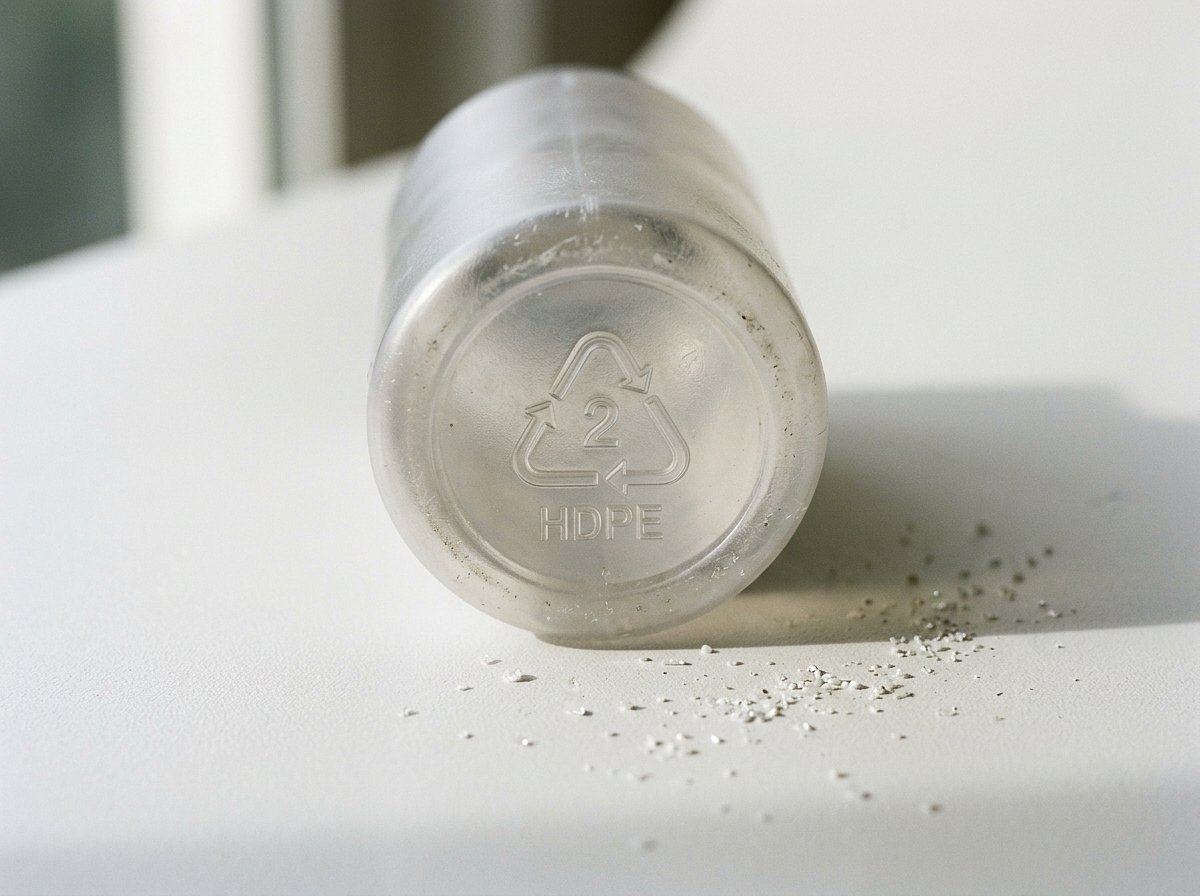
A recyclable claim on most bottles describes the resin, not the finished article. It rarely means anyone ran the actual bottle through the steps a recycling facility performs: shredding, washing, sink-float separation, melting back into pellets, and molding into something usable.
The stakes are concrete. Only about 9% of plastic waste worldwide is recycled. Roughly half is landfilled and about 19% is incinerated. Even inside that 9% that does get collected, packaging that fails at the sort line still ends up landfilled. The claim survives the bin. It does not survive the facility.
That matters for you as a consumer making a purchasing decision. Under the FTC's Green Guides, a recyclable claim that materials recovery facilities reject in practice is legally questionable, meaning the bottle you carefully placed in the blue bin may never actually get recycled, regardless of what the label says.
What made this question worth testing carefully
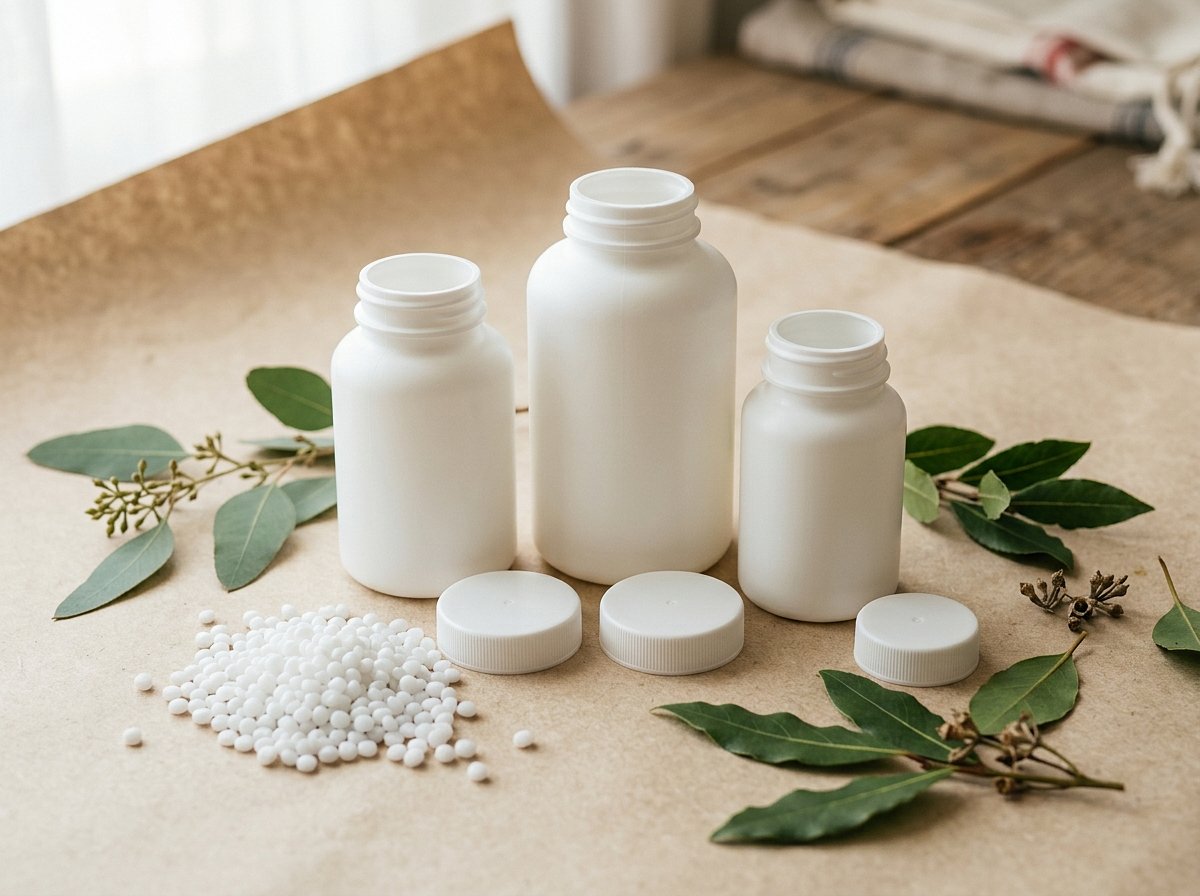
BioBottles® are made from HDPE, the #2 plastic behind milk jugs and detergent bottles, and the single most successfully recycled plastic in the United States. HDPE recycling already handles billions of units annually at facilities serving roughly 94% of the US population.
BioBottles® also carry PlasticIQ® technology, a catalyst blended into the resin at roughly 1% and engineered to help the material break down safely rather than fragment into microplastics if a bottle escapes containment. Because that additive chemistry is built into the plastic, the honest way to answer "does this belong in the HDPE stream" was to run the actual rigid bottle through the actual protocol. Not a film. Not a resin sample. The bottle.
One detail matters for anyone reading a scanner spec: modern sorting facilities use near-infrared scanners that identify plastic by reading the base polymer. PlasticIQ® is integrated into the plastic itself, not applied as a surface coating or label, so the scanner reads a BioBottle® as what it is: HDPE.
The test, the lab, and the numbers
The document that settles this is report AST-23-203, issued 4 December 2023 by AIMPLAS, the Instituto Tecnológico del Plástico, a Valencia-based plastics research institute accredited for international polymer testing. AIMPLAS ran the bottle against the APR Critical Guidance Protocol (document reference HDPE-CG-01), the checklist the Association of Plastics Recyclers publishes so US facilities can judge whether a new package belongs in their rigid HDPE stream.
The bottle was shredded to 5mm flakes, washed in the standard commercial wash, and put through sink-float separation, the stage where dense contaminants sink and recyclable HDPE floats. In every step, the BioBottle® flakes showed 100% flotation with no sinking particles, behaving exactly like the conventional HDPE control. The flakes were then melted, re-pelletized, and molded into standardized test plaques at inclusion rates of 25% and 50%, far above anything a real municipal stream would ever see, so any effect on material quality would show at the extremes.
Every measured property came back inside the benchmark:
- Tensile strength (force to pull a material apart): 27.6 MPa at 50% inclusion, identical to the control, 0% change
- Density: 0.967 g/cm³, above APR's 0.941 g/cm³ minimum
- Flexural modulus (resistance to bending), elongation at break, and Izod impact resistance (resistance to sharp impact): all inside APR preferred values
""No disconformities were detected in any of the samples, being all within the APR benchmark.", AIMPLAS report AST-23-203"
One transparency note, because that is what makes a finding credible: the report observed low melt strength during pelletizing, meaning the melted plastic was less viscous than typical. That applied equally to every sample, including the 100% conventional HDPE control. It is a property of the specific material grade and lab line, not a consequence of the PlasticIQ® additive.
What this proves, and what it does not
A pass on the APR Critical Guidance Protocol means one specific thing: BioBottles® are compatible with the post-consumer rigid HDPE recycling stream. It is not a claim about ocean behavior or industrial composting, and it should not be read as one. The test answers the question a sort line actually asks.
The certification language worth trusting names a specific protocol, a specific lab, and a date, so you can read the report yourself. You can request the full AIMPLAS report AST-23-203 directly from Green Frog Packaging.
Every bottle ends up somewhere. The test is what determines whether "somewhere" is a recycling stream.
Sources
Every claim above is drawn from the following. Where we are permitted to host the document we have; where the publisher holds it, the link goes to them.
Related reading
- California SB 54: The Recycling Evidence Behind BioBottles® A third-party lab tested the actual BioBottles® HDPE bottle to the recycling industry's own protocol and it met every benchmark.
- Can BioBottles go in normal curbside recycling with other HDPE bottles? Yes, BioBottles® go in curbside HDPE recycling where programs exist. A third-party lab ran the actual bottle through the recycling industry's own protocol.
- Are BioBottles and PlasticIQ Recyclable? BioBottles® were run through the plastic recyclers' own HDPE protocol by a third-party lab and passed every benchmark. Here is the result.