Oxo-Biodegradable vs. Oxo-Degradable Plastic: Why the Difference Matters for Microplastic Prevention
Learn the critical difference between oxo-degradable and oxo-biodegradable plastic — and why it determines whether your packaging creates persistent microplastics or prevents them.
Two terms. One critical difference. When it comes to plastic packaging and the global microplastics crisis, the distinction between oxo-degradable and oxo-biodegradable is not a matter of semantics — it determines whether your packaging becomes part of the problem or part of the solution.
What Is Oxo-Degradable Plastic?
Oxo-degradable plastics use a pro-oxidant additive to accelerate the physical fragmentation of plastic under exposure to heat, UV light, and oxygen. On the surface, that sounds promising. In practice, it is not.
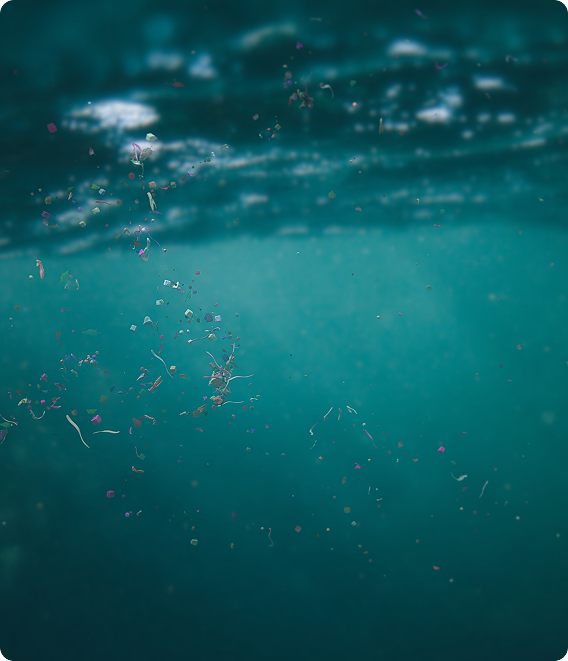
The fragmentation stops there. Oxo-degradable plastics break into smaller and smaller pieces — but those pieces remain synthetic polymer fragments. They do not become bioassimilable by microorganisms. They do not complete a biological cycle. They simply become microplastics: persistent, synthetic, and resistant to further breakdown.
What Is Oxo-Biodegradable Plastic?
Oxo-biodegradable plastic takes the process further — and that additional step is everything. Rather than stopping at fragmentation, oxo-biodegradable technology initiates controlled oxidative chain scission that reduces polymer molecular weight to a threshold where the material transitions from a hydrophobic synthetic polymer into a hydrophilic substrate that microorganisms can assimilate.
In plain terms: the material does not just get smaller — it changes at a molecular level and becomes available as a carbon source for microbial communities. No persistent synthetic fragments remain.
How PlasticIQ® Technology Works
BioBottles® and BioCaps® from Green Frog Packaging incorporate PlasticIQ® — a Prodegradant BioPolymer Catalyst integrated into HDPE and PP at approximately 1% concentration. PlasticIQ® represents the scientific evolution of controlled oxidative technology, engineered specifically to meet modern regulatory, recyclability, and performance requirements.
- Step 1 — Oxidation: When exposed to environmental conditions (oxygen, heat, UV), PlasticIQ® initiates controlled oxidative chain scission, reducing polymer molecular weight from above 200,000 Daltons to below 5,000 Daltons.
- Step 2 — Bioassimilation: Below this molecular weight threshold, the material becomes hydrophilic and bioassimilable — a carbon source that microorganisms can metabolize.
- Step 3 — Ecotoxicity verification: ASTM D6954 Tier 3 testing confirms no harmful residues remain in the environment after the process is complete.
The Head-to-Head Comparison
- Oxo-Degradable: Fragmentation only → Persistent microplastic fragments remain → Fails ASTM D6954 Tier 2 and Tier 3
- Oxo-Biodegradable (PlasticIQ®): Controlled oxidation + microbial assimilation → No persistent fragments → Green Frog Packaging's PlasticIQ® technology has demonstrated performance across all three tiers of ASTM D6954 (2024 Edition), validated by Jordi Labs
Why This Matters for Brand Owners
Consider the scale of the problem: only approximately 9% of global plastic is recycled. Roughly 22% is mismanaged — meaning it enters the environment through littering, inadequate infrastructure, or improper disposal. Even responsible brands with excellent sustainability intentions cannot guarantee their packaging will be recovered and recycled in every market.
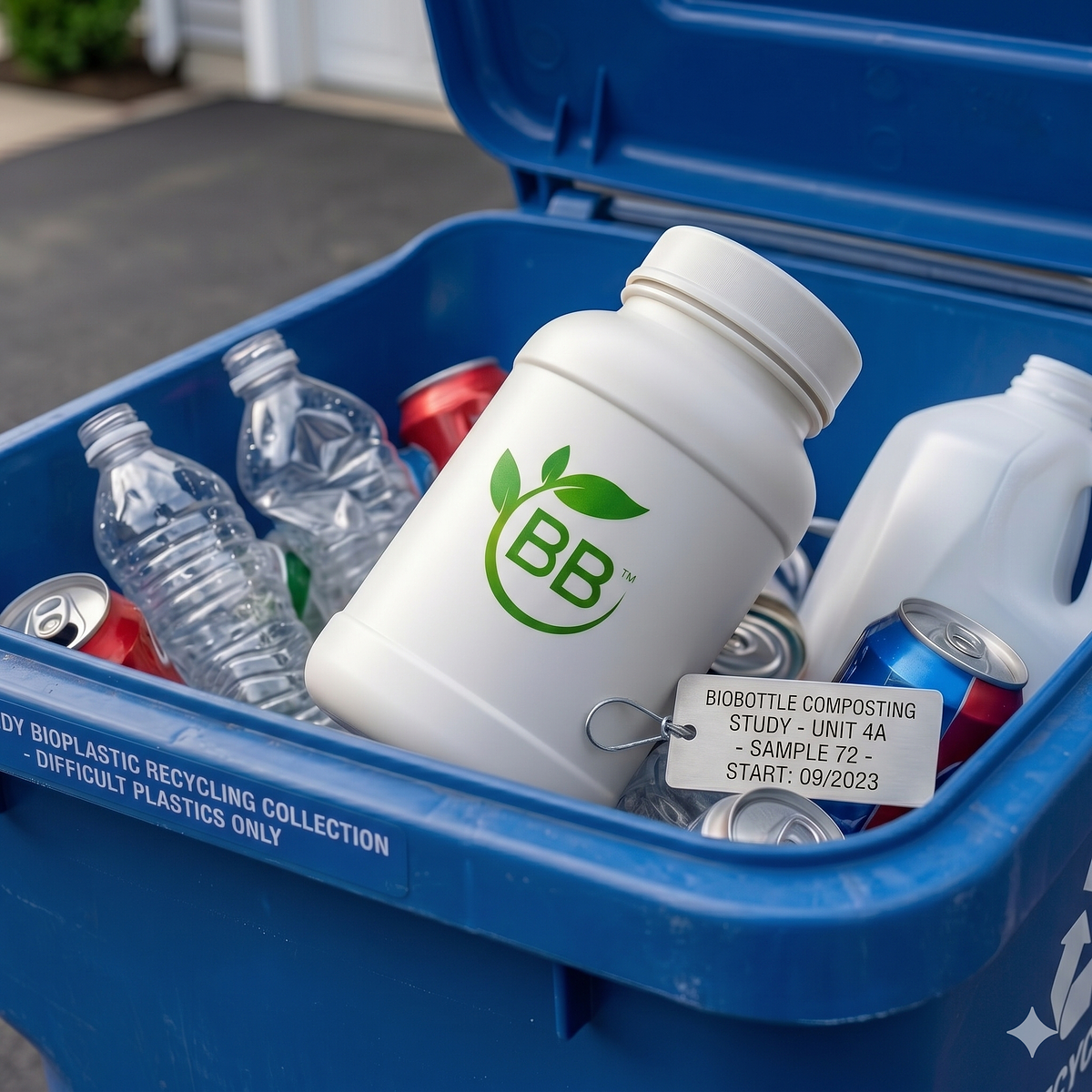
That is precisely the scenario BioBottles® and BioCaps® are engineered to address. Under normal use and proper disposal, they perform identically to standard HDPE and PP packaging — recyclable through existing systems where local programs support it. But if a bottle escapes containment, PlasticIQ® technology activates, initiating the oxo-biodegradable pathway: controlled oxidative chain scission reduces polymer molecular weight until the material becomes bioassimilable by microorganisms, which then metabolize it as a carbon source — leaving no persistent microplastic legacy in the environment.
Validated Science, Not Marketing Claims
PlasticIQ® technology has been independently validated by Jordi Labs in the United States and reviewed by international scientific experts, including Professor Telmo Ojeda and researchers at CIQA in Mexico. Third-party validation of the scientific foundation is non-negotiable at Green Frog Packaging — every claim traces back to testing data, not marketing intent.
BioBottles® and BioCaps® are also FDA food-contact compliant under 21 CFR §§177.1520, 178.2010, and 175.300 — meaning brands in supplement, nutraceutical, food and beverage, and personal care categories can adopt them without compromising product safety or regulatory standing.
The Right Technology for a Measurable Problem
Oxo-degradable plastics accelerate fragmentation while leaving the microplastic problem fully intact. Oxo-biodegradable technology — when properly formulated and verified — addresses the root outcome: preventing persistent synthetic fragments from accumulating in ecosystems.
If your brand is evaluating packaging options and wants claims that are scientifically substantiated, FTC Green Guides compliant, and genuinely differentiated, BioBottles® and BioCaps® with PlasticIQ® technology offer a verifiable path forward. Learn more at gogreenfrog.com.
Related reading
- Does PlasticIQ technology really prevent microplastic formation? PlasticIQ® technology prevents microplastic formation by completing controlled oxidation and full microbial consumption, verified under ASTM D6954 testing.
- How Packaging Companies Can Reduce Microplastic Formation From Their Products Packaging companies can reduce microplastic formation by adopting PlasticIQ® technology, validated under ASTM D6954 Tier 1-3 testing. Learn how BioBottles® and BioCaps® are engineered to help prevent persistent microplastic fragments if packaging escapes containment.
- Oxo-Biodegradable vs. Oxo-Degradable Plastic: Why the Distinction Matters for Your Brand Oxo-degradable plastics create persistent microplastics. Oxo-biodegradable BioBottles® with PlasticIQ® technology complete bacterial assimilation, verified under ASTM D6954 Tier 1-3. Learn the science and the regulatory difference.